

Natural curly hair extensions are extensions made to match textured hair, from loose waves to tight coils, so they blend with your own curls instead of standing out as straight or overly uniform. The key is matching curl pattern, density and colour, choosing an attachment method that does not strain your edges, and caring for the extensions with the same moisture-focused routine as natural curly hair.
Matching your curl pattern
Curly hair is often described with a typing system running from 2 (wavy) through 3 (curly) to 4 (coily), each with sub-types A to C. It is a rough guide, since most heads have more than one pattern, but it helps when shopping or talking to a stylist.
| Your hair | What to look for in extensions | Tips |
|---|---|---|
| Wavy (type 2) | Loose body wave or beach-wave textures | Lighter wefts blend more easily |
| Curly (type 3) | Defined spiral curls in a matching diameter | Match curl size, not just “curly” |
| Coily (type 4) | Kinky curly, afro-kinky or coily textures | Look for textures sold as kinky or coily, not relaxed |
| Mixed textures | A texture between your two main patterns | Bring a sample of your hair to compare |
Compare extensions with your hair when it is freshly washed and styled the way you usually wear it, since shrinkage can make coily hair look much shorter than it really is.

Human hair or synthetic?
Human hair curly extensions can usually be washed, conditioned and gently heat-styled like your own hair, and they move naturally. Some are naturally curly; many are processed to create curls, which can loosen over time. Synthetic textured hair is cheaper and holds a pattern well, but often cannot take heat and may look shinier than natural hair. Heat-resistant fibres exist, but check the label.
Colour matching tips
Curly hair often shows several shades at once, with lighter ends from sun exposure and a darker root area. Matching to the mid-lengths in daylight usually gives the most natural blend. If you colour your own hair, do it before the extensions are fitted so the stylist can match the final shade. Human hair extensions can sometimes be toned to match, but lightening them is risky because processed curls can loosen or become dry.
Attachment methods for textured hair
| Method | How it attaches | Points for curly hair |
|---|---|---|
| Clip-in wefts | Clips snap onto sections of your hair | Lowest commitment; good for occasions |
| Sew-in wefts | Sewn onto braided cornrows or a track | Common for coily hair; tension and braid tightness are key |
| Tape-in | Thin panels sandwich small sections | Needs smooth sections; less common for tight coils |
| Keratin or micro-link strands | Individual strands bonded or clamped | Works for some curl types; skilled fitting essential |
| Crochet | Hair looped through cornrows with a hook | Versatile and quick; avoid over-tight braids |
Our main guide to hair extensions covers each method in more detail.
Your edges are not renewable for ever. Comfort at the hairline on the day of fitting matters more than how sleek the install looks.
Protecting your own hair
Curly and coily hair is especially prone to traction alopecia, hair loss caused by repeated pulling from tight braids, weaves and extensions. Early signs include tenderness, small bumps around the follicles, broken hairs at the hairline and a receding or thinning edge. If caught early it can often recover; if the pulling continues for years, the loss can become permanent.
Ask your stylist to stop or loosen if you notice
- Pain, tightness or a headache after installation
- Bumps, redness or pus around braids or attachment points
- Thinning edges or temples
- Hair breaking off at the roots when extensions are removed
See a dermatologist if your edges are thinning or you have scalp pain or bumps that do not settle. Our hair loss stages guide can help you describe what you see.
Caring for curly extensions
A curl-friendly routine
- Wash gently with a moisturising shampoo or co-wash, focusing on your scalp
- Condition generously and detangle with fingers or a wide-tooth comb, from ends upward
- Use leave-in conditioner and a curl cream or gel to define the pattern
- Air-dry or diffuse on low heat
- Sleep in a satin bonnet or on a satin pillowcase
- Refresh curls with water and a little leave-in instead of washing daily
Curly extensions in the UAE climate
Humidity, sweat and frequent air conditioning all affect curls. Humid days can cause frizz and expand volume; air-conditioned rooms dry hair out. Chlorine and salt water dry both your hair and extensions. Rinse with fresh water after swimming and reapply leave-in conditioner. For sew-ins, make sure your scalp and braids dry fully after washing or the gym, since trapped moisture can cause odour and irritation.
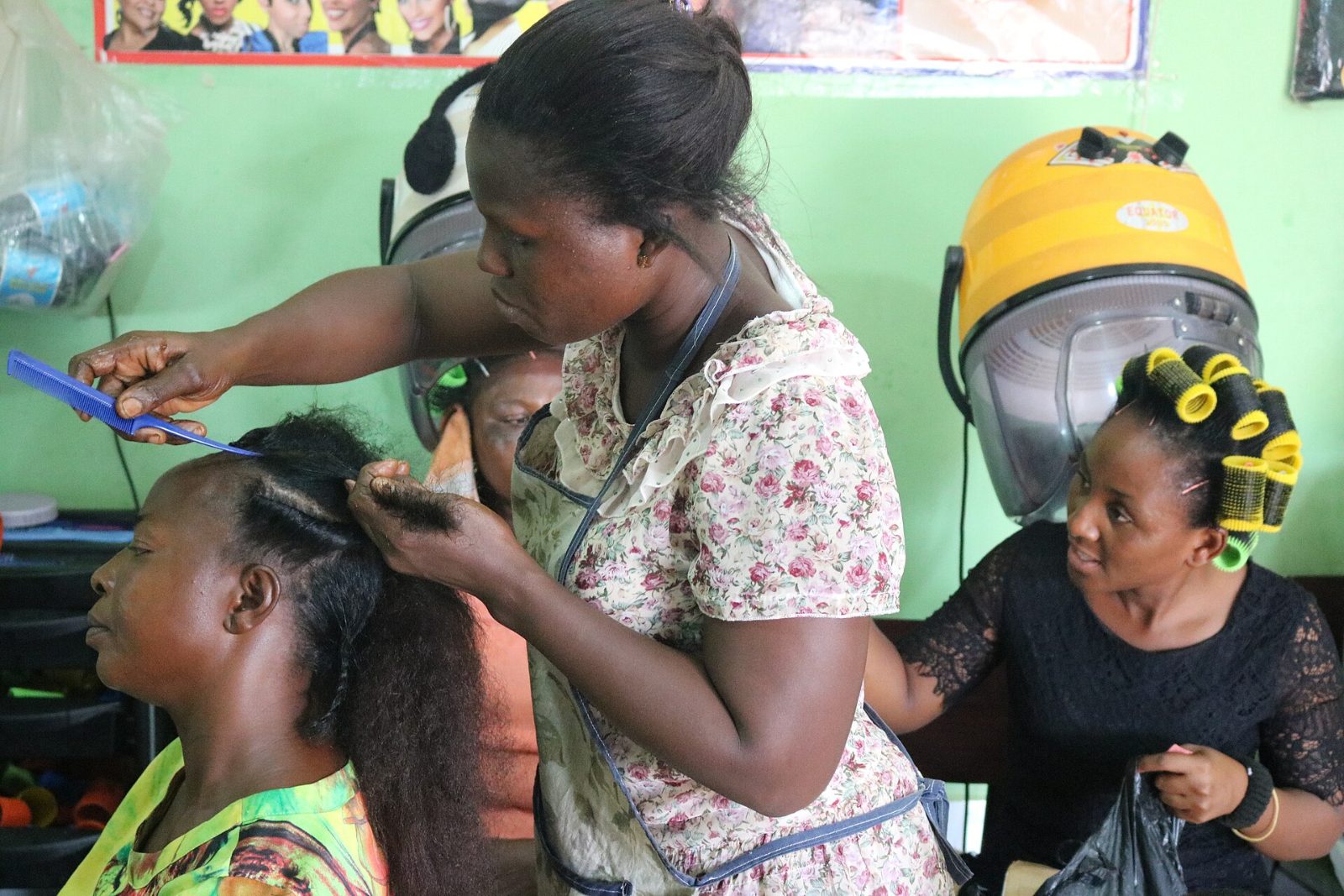
Choosing a stylist
Look for a stylist with experience in textured hair and extensions, and ask to see their work on curl patterns like yours. A good stylist will check your scalp, discuss your edges, recommend breaks between installs and refuse to braid too tightly. Prices vary depending on the method, the amount of hair and the salon, so ask for a quote that includes the hair, installation, maintenance and removal.
Frequently asked questions
How do I choose the right curly extensions for my hair?
Match the curl size and texture to your own hair on wash day, and match the colour in natural light. Bring a sample of your hair if you are buying in person.
Can I straighten curly extensions?
Human hair extensions can usually be straightened with heat protection, though repeated heat may loosen the curl. Most synthetic extensions cannot take heat.
How long can I keep sew-in extensions in?
Stylists commonly recommend several weeks before removal, followed by a break for your scalp and hair. Your stylist should give you a plan based on your hair and scalp.
Do curly extensions cause hair loss?
Correctly fitted extensions with low tension should not, but tight braids, heavy wefts and long wear without breaks can cause traction alopecia.
Sources: American Academy of Dermatology: Hair loss, NHS: Hair loss, Dubai Health Authority
Cover photo: Jose Huwaidi, CC BY-SA 4.0. Last reviewed: 2026-11-25. General information only, not medical advice. Please consult a licensed practitioner in the UAE about your own situation.