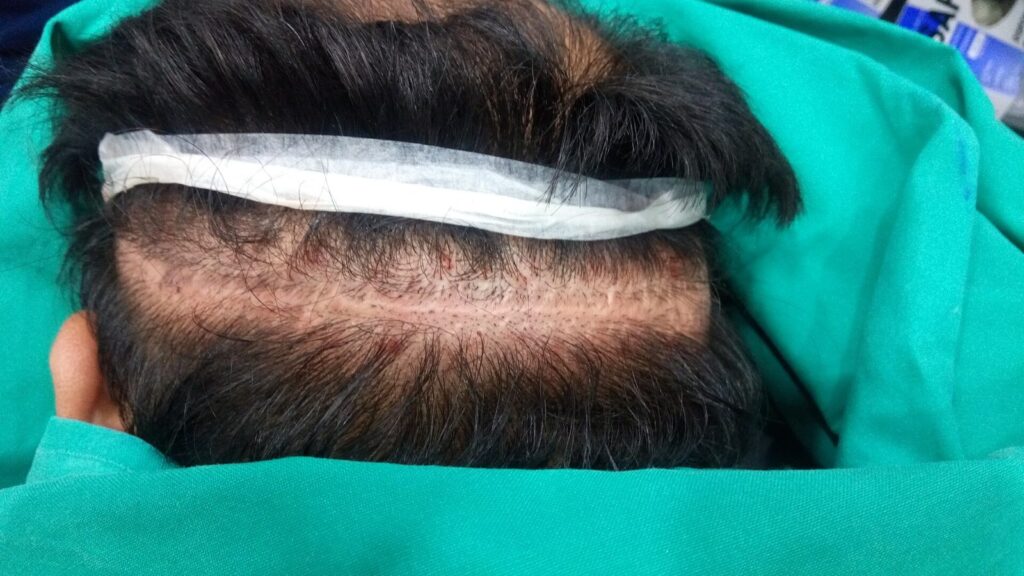

Dandruff does not usually cause permanent hair loss. However, the itching, scratching and scalp inflammation that come with more severe dandruff or seborrhoeic dermatitis can increase hair shedding and breakage for a while, and that hair normally grows back once the scalp is under control. If you have flakes and noticeable thinning at the same time, it is often two separate problems happening together, so it is worth looking at both.
What dandruff actually is
Dandruff is a common, mild form of seborrhoeic dermatitis. It causes white or yellowish flakes and often itching. Three factors are involved:
- Sebum, the natural oil on the scalp.
- Malassezia, a yeast that lives on most people’s skin and feeds on sebum.
- Individual sensitivity, meaning some people’s skin reacts to the by-products of the yeast with faster skin cell turnover and inflammation.
Dandruff is not caused by poor hygiene, though infrequent washing can make flakes more visible. It often gets worse with stress, in cold or very dry weather, and in some people with heat and sweat.
How dandruff and hair loss are connected
| Mechanism | Effect on hair | Usually reversible? |
|---|---|---|
| Scratching an itchy scalp | Breaks hairs and pulls out loose hairs | Yes, once itching is controlled |
| Scalp inflammation | May push more hairs into the shedding phase | Usually, once inflammation settles |
| Seborrhoeic dermatitis alongside pattern hair loss | Flakes make thinning more noticeable; studies suggest inflammation may add to it | Pattern hair loss needs its own treatment |
| Thick adherent scale | Hairs can come out when scale is removed | Yes |
Some research suggests that scalp inflammation and Malassezia may worsen androgenetic alopecia, and antifungal shampoos containing ketoconazole are sometimes used alongside standard hair loss treatment for that reason. Evidence is modest, but treating dandruff is sensible either way.
Dandruff rarely takes your hair; scratching and untreated inflammation can make it look as if it does.
Is it dandruff or something else?
Flakes and itching can come from several conditions, some of which do cause hair loss.
Conditions that can look like dandruff
- Scalp psoriasis: thicker, silvery, well-defined plaques, sometimes beyond the hairline; can cause temporary shedding.
- Tinea capitis (scalp ringworm): a fungal infection, more common in children, with scaly patches and broken hairs; needs oral antifungal medicine.
- Contact dermatitis: itching and redness after a new hair dye, shampoo or styling product.
- Dry scalp: small, fine white flakes without oiliness, common in dry, air-conditioned environments.
- Lichen planopilaris and other scarring alopecias: redness and scale around follicles with permanent hair loss; need urgent dermatology review.
Treating dandruff
Most dandruff responds to medicated shampoos. Active ingredients that are widely used include:
- Ketoconazole: antifungal, reduces Malassezia.
- Zinc pyrithione: antifungal and antibacterial.
- Selenium sulfide: slows skin cell turnover and reduces yeast.
- Salicylic acid: helps lift scale.
- Coal tar: slows skin cell turnover; has a strong smell and can stain.
- Ciclopirox: antifungal, sometimes prescription.
Use as directed: usually leave on the scalp for a few minutes before rinsing, two or three times a week at first, then less often for maintenance. Rotating between two different active ingredients helps some people. If one product does not help after four weeks, try another active ingredient. See our guide to the best shampoo for hair loss for how anti-dandruff and hair loss products overlap.
Scalp care in the UAE
- Wash more often if you sweat heavily outdoors or at the gym; sweat and oil left on the scalp can worsen flakes.
- Dry the scalp fully, especially under a headscarf, cap or ghutra, to avoid trapped moisture.
- Hard water can leave residue; a clarifying wash every week or two can help some people.
- Indoor air-conditioning dries skin; avoid very hot water and harsh, frequent stripping washes.
- Wash caps, scarves and pillowcases regularly.
When to see a doctor
See a GP or dermatologist if:
- Over-the-counter shampoos have not helped after a month or two.
- The scalp is red, swollen, painful, weeping or crusted.
- You notice patches of hair loss, broken hairs, or scarring.
- Scaling spreads to the face, ears, chest or other areas.
- A child has scaly patches with hair loss, which may be tinea capitis.
- You have hair thinning that continues even when flakes are controlled.
A dermatologist can examine the scalp, sometimes take a scraping or sample, and prescribe stronger treatments such as medicated solutions or short courses of anti-inflammatory lotions. For thinning, they can assess for pattern hair loss and other causes. Our hair loss stages guide and for hair loss, which doctor to consult explain next steps.
Myths worth dropping
- “Oiling the scalp cures dandruff.” For many people, heavy oils feed Malassezia and can make flakes worse.
- “Washing less is better for dandruff.” Usually the opposite: regular washing with a medicated shampoo helps.
- “Dandruff is contagious.” It is not, though tinea capitis, which can look similar, is.
- “Dandruff means a dry scalp.” Classic dandruff is linked to oil and yeast; dry scalp is a different issue.

Who should be cautious with medicated shampoos
Pregnant or breastfeeding women, children, and people with very sensitive or broken skin should check with a pharmacist or doctor before using stronger products such as coal tar or prescription antifungals. Stop any product that causes burning, rash or swelling.
Frequently asked questions
Will my hair grow back after dandruff is treated?
If shedding was due to scratching or inflammation, yes, usually over a few months. If thinning continues, another cause such as pattern hair loss may be involved.
Can I use anti-dandruff shampoo every day?
Some gentle formulas can be used often, but many medicated shampoos are used two or three times a week. Follow the label and alternate with a mild shampoo if your scalp gets dry.
Does ketoconazole shampoo help hair loss?
It treats dandruff and seborrhoeic dermatitis and is sometimes used alongside hair loss treatment. It is not a stand-alone treatment for pattern hair loss.
Can stress cause dandruff?
Stress is a common trigger for flare-ups in people prone to seborrhoeic dermatitis.
Sources: American Academy of Dermatology, NHS: Dandruff, British Association of Dermatologists
Cover photo: Warisanwar, CC BY-SA 4.0. Last reviewed: 2026-11-25. General information only, not medical advice. Please consult a licensed practitioner in the UAE about your own situation.