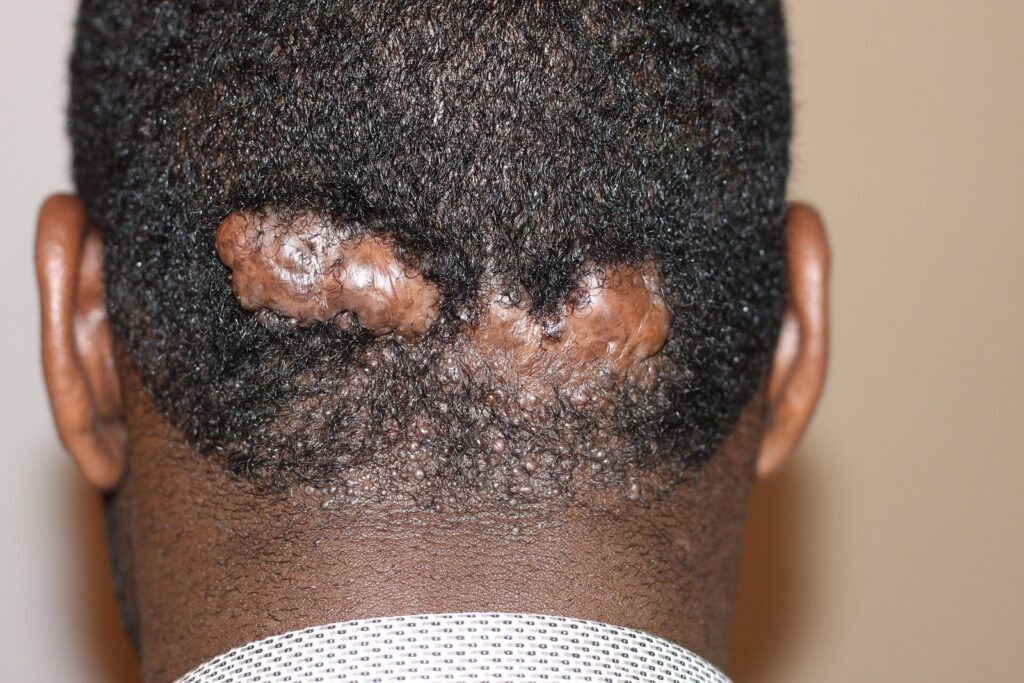

Yes, scalp psoriasis can cause hair loss, but it is usually temporary. Shedding tends to come from inflammation, intense itching and scratching, forcefully picking or combing off scales, and sometimes harsh treatments, rather than permanent damage to follicles. Once psoriasis is controlled and the scalp is treated gently, hair usually grows back. Rarely, very severe or long-standing inflammation can cause scarring, which is why early treatment matters.
In this guide
What scalp psoriasis is
Psoriasis is a long-term immune-related skin condition in which skin cells build up quickly, forming thick, red or discoloured patches with silvery or white scale. The scalp is one of the most commonly affected areas. Patches may be small and mild, or cover large areas and spread beyond the hairline onto the forehead, behind the ears and the back of the neck.
Psoriasis is not contagious. It tends to come and go, with flares triggered by factors such as stress, infections, cold dry weather, skin injury, some medications and, for some people, alcohol and smoking.
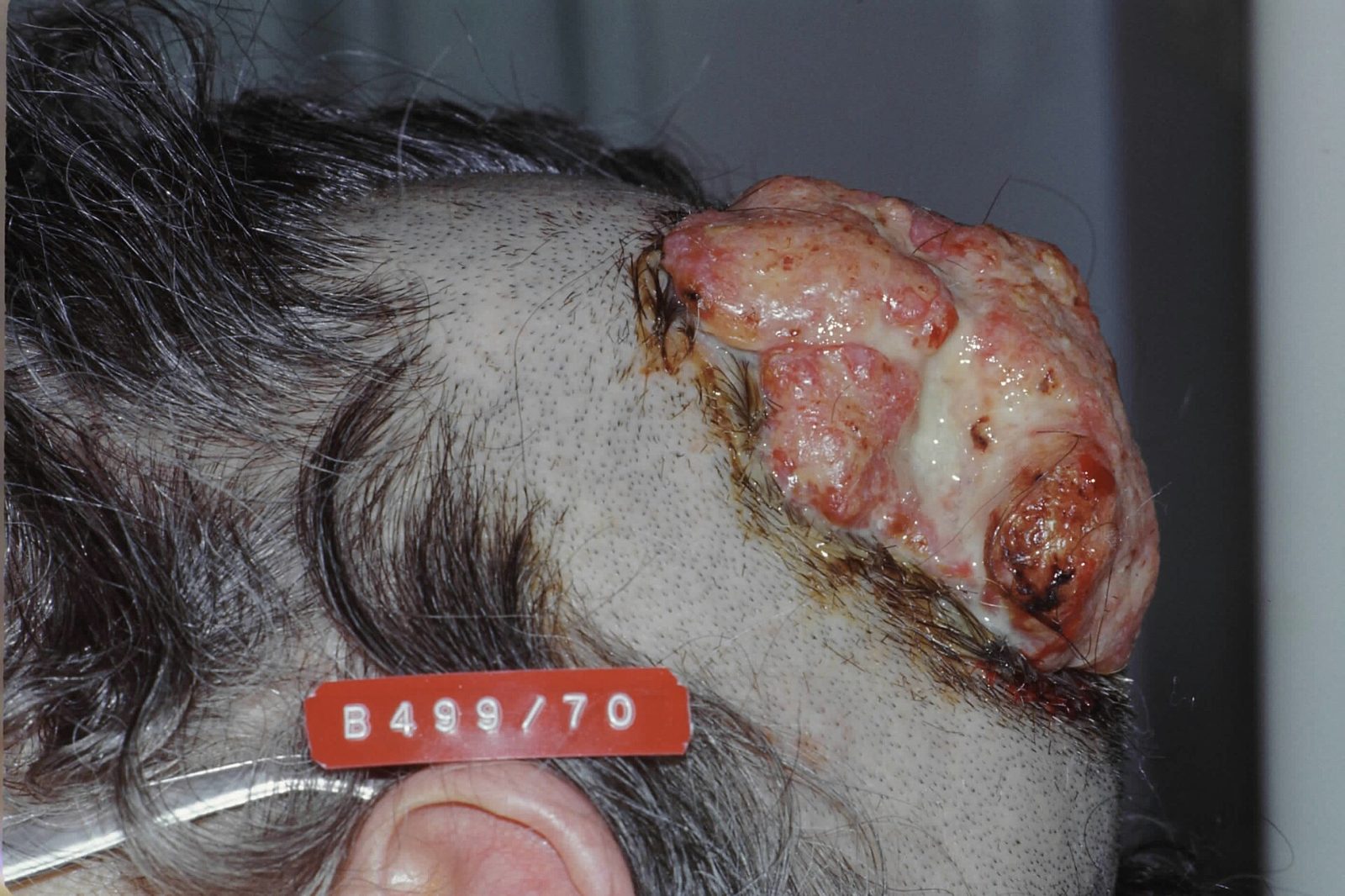
How it leads to hair loss
- Scratching and rubbing. Itch can be intense, and scratching breaks hairs and pulls them out.
- Removing scale roughly. Picking or combing hard at plaques removes hairs stuck in the scale.
- Inflammation. Active inflammation around follicles can cause shedding in affected areas.
- Stress of a flare. Significant flares can trigger telogen effluvium, a temporary diffuse shedding a few months later.
- Treatments. Some strong treatments, or using them incorrectly, can irritate the scalp.
Hair loss from psoriasis is usually limited to plaque areas and returns once the skin settles.
Psoriasis vs dandruff vs other conditions
| Feature | Scalp psoriasis | Dandruff / seborrhoeic dermatitis | Fungal infection (tinea capitis) |
|---|---|---|---|
| Scale | Thick, silvery, well-defined plaques | Fine, greasy or yellowish flakes | Scaly patches, may have broken hairs |
| Redness | Clear red or darker patches | Mild redness | Variable, sometimes swollen |
| Beyond the hairline | Often | Sometimes, on face and eyebrows | Less common |
| Elsewhere on body | Elbows, knees, nails, lower back | Face, chest | Mostly scalp; more common in children |
| Hair loss | Temporary, in plaques | Uncommon | Patchy, may need urgent treatment |
Because these conditions can look alike, a dermatologist should confirm the diagnosis. Fungal infections need different treatment, and scarring hair loss conditions can also cause scaling.
Treatment options a dermatologist may use
Treatment depends on severity and is guided by a doctor. Options commonly include:
- Medicated shampoos containing ingredients such as coal tar, salicylic acid or ketoconazole, used as directed.
- Topical corticosteroids in scalp-friendly forms such as solutions, foams or shampoos.
- Vitamin D analogues, sometimes combined with steroids.
- Scale softeners applied before washing to loosen plaques gently.
- Phototherapy, sometimes with special devices for the scalp.
- Systemic or biologic medicines for moderate to severe psoriasis or psoriasis affecting other areas or joints.
Use treatments exactly as prescribed. Stronger steroids used for long periods can thin the skin, so follow your doctor’s plan.
With scalp psoriasis, gentle scale removal and steady treatment protect your hair. Force does the opposite.
Gentle scalp care at home
Habits that reduce hair loss
- Soften scale with a prescribed or recommended product before washing; do not pick.
- Wash with lukewarm water and massage gently with fingertips, not nails.
- Use a wide-tooth comb on wet hair, starting from the ends.
- Keep nails short to reduce damage from night-time scratching.
- Avoid harsh dyes, bleach, relaxers and very hot styling tools during flares.
- Choose loose hairstyles; tight braids and buns add tension.
Head coverings, styling and salons
People who wear a hijab, shayla, ghutra or cap every day can manage scalp psoriasis comfortably with a few adjustments. Choose breathable cotton or soft under-scarves, wash them often, and avoid tight bands that rub along the hairline where plaques often sit. Let the scalp breathe uncovered at home when you can, and apply treatments at times when you will not be covering your hair straight away, so they can absorb.
At the salon, tell your hairdresser about psoriasis before they start. A good stylist will avoid scratching the scalp while washing, skip harsh chemical services on inflamed areas, and keep hot tools away from sore patches. If a treatment such as colouring is planned, ask your dermatologist whether to time it for when your scalp is calm.
Climate, sun and water in the UAE
Many people with psoriasis find that some sun exposure improves their skin, and medical phototherapy uses controlled UV light. However, strong UAE sun can cause sunburn, which can trigger psoriasis flares in damaged skin (the Koebner response) and raise skin cancer risk. Ask your dermatologist how much sun is safe for you and protect the scalp with a hat during peak hours.
Air-conditioned indoor air can dry the skin, and some people feel their scalp is itchier after switching homes or water supply. A gentle moisturising routine and following your treatment plan usually matter more than water type.
When to see a doctor
Book a dermatology appointment if
- Scale is thick, widespread or spreading beyond the hairline
- You notice patches of hair loss or broken hairs
- Itch is disturbing your sleep
- The scalp is weeping, painful, swollen or crusted with yellow crusts
- You have joint pain, swelling or stiffness, which may be psoriatic arthritis
- Over-the-counter shampoos have not helped after several weeks
In the UAE, dermatologists in DHA, DOH or MOHAP licensed clinics can diagnose and manage psoriasis. Our article on which doctor to consult for hair loss explains the referral route.
Living with psoriasis
Psoriasis is a long-term condition, and flares can be frustrating and affect confidence. It is also linked with other health issues, including psoriatic arthritis, cardiovascular risk and low mood, so regular check-ups are worthwhile. Support from your doctor, and from people who understand the condition, helps. Hair loss from psoriasis is one of its more reversible effects, and getting the scalp under control is usually the fastest way to see regrowth.
If you are also noticing thinning that does not match plaque areas, compare it with the patterns in our hair loss stages guide, since pattern hair loss can coexist with psoriasis.
Frequently asked questions
Will my hair grow back after scalp psoriasis?
In most cases, yes, once inflammation is controlled and the scalp is treated gently.
Can I dye my hair if I have scalp psoriasis?
Avoid dyes during flares or on broken skin. Patch test first and ask your dermatologist when it is safe.
Is scalp psoriasis caused by poor hygiene?
No. It is an immune-related condition, not a hygiene problem, and it is not contagious.
Does stress make scalp psoriasis worse?
Stress is a common trigger for flares. Managing stress can help, alongside medical treatment.
Sources: American Academy of Dermatology, National Psoriasis Foundation, NHS
Cover photo: Htirgan, CC BY-SA 3.0. Last reviewed: 2026-11-25. General information only, not medical advice. Please consult a licensed practitioner in the UAE about your own situation.