
Human hair extensions are made from real hair collected from donors, then cleaned, sorted and attached to tapes, bonds, wefts or clips. Unlike synthetic fibre, they can be washed, heat styled and often coloured like your own hair, and good quality sets can last many months or longer with care. Quality ranges enormously, so the terms on the label, such as Remy, virgin and double drawn, matter more than the words “100% human hair”.
Decoding the labels
The extension market uses a lot of terms, and some are used loosely. These are the ones worth understanding.
| Term | What it means | Why it matters |
|---|---|---|
| Remy (Remi) | Cuticles kept and aligned root to tip | Less tangling and matting, longer life |
| Non-Remy | Cuticles mixed or stripped, often coated in silicone | Feels silky at first, tangles after washes |
| Virgin | Never chemically coloured, permed or bleached | Healthier, can be coloured once by a professional |
| Single drawn | Natural mix of lengths, thinner at the ends | More natural taper, less volume at the ends |
| Double drawn | Shorter hairs removed so most strands are full length | Thicker ends, usually costs more |
| Cuticle-intact | Outer layer of hair kept | Similar meaning to Remy in most listings |
| “Grade 8A, 10A” | Seller’s own grading | No industry standard; do not rely on it |
“100% human hair” tells you what the hair is; “Remy” and “virgin” tell you how it will behave.
Human hair versus synthetic
Synthetic extensions are made from plastic fibres. They are cheaper and hold a set style, but most cannot be heat styled, they tangle more quickly and they look shinier than natural hair. Heat-friendly synthetic fibres exist but still have lower heat limits. Human hair costs more upfront but usually lasts longer and blends better. Our article on synthetic hair extensions goes into the details.

Methods of attachment
The hair quality and the method are separate choices.
- Clip-ins: temporary, applied at home, removed nightly.
- Tape-ins: semi-permanent, flat wefts with adhesive, moved up every 6 to 8 weeks in many salons.
- Keratin bonds: individual strands fused near the root with heat.
- Micro rings, nano rings, I-tips: strands attached with small rings, no glue or heat.
- Sewn or hand-tied wefts: rows of hair attached to a braid or bead line.
Each puts different stress on your natural hair. Heavier methods suit thicker hair. If your hair is fine or you have any thinning, ask your stylist which method spreads the weight best. See weft hair extensions and Russian hair extensions for more.
How long human hair extensions last
There are two lifespans to think about: how long the hair lasts and how long the fitting lasts.
Typical timelines
- Clip-ins: the hair can last a long time with gentle use because it is not worn daily overnight.
- Tape-ins and rings: refitted every 6 to 10 weeks as your hair grows; good hair can often be reused for several refits.
- Keratin bonds: worn for a few months, then removed; strands are not usually reused.
- Sewn wefts: refitted every several weeks; the wefts can often be reused.
Sun, chlorine, sea water, hard water and heat tools shorten the life of extension hair because it gets no natural oils from your scalp.
What drives the price
In the UAE, the price of human hair extensions depends on:
- Hair quality (Remy, virgin, double drawn).
- Length and grams: longer and fuller sets need more hair.
- Method: individual bonds take far longer to fit than tapes or clips.
- Colour matching and blending, including any custom colouring.
- Salon and stylist experience.
- Maintenance visits after the first fitting.
Because these vary so much, quotes are hard to compare. Ask for the grams of hair, length, method, fitting fee and maintenance costs in writing.
Protecting your own hair
Extensions are safe for many people when fitted and maintained properly. Problems usually come from weight, tension or leaving them in too long.
Signs extensions may be damaging your hair
- Pain, itching or tightness at attachment points.
- Small bumps or redness around follicles.
- Hairs breaking near the root.
- Thinning at the temples, hairline or where wefts sit.
These can be early signs of traction alopecia. Remove the extensions and see a dermatologist. Caught early, traction hair loss usually recovers; long-term traction can cause permanent loss.
People who should get advice before fitting extensions include those with active hair loss, scalp conditions such as psoriasis or seborrhoeic dermatitis, sensitive skin or adhesive allergies, and anyone undergoing treatment that affects the hair. Our hair loss stages guide can help you describe any thinning to a doctor.
Everyday care
Care routine
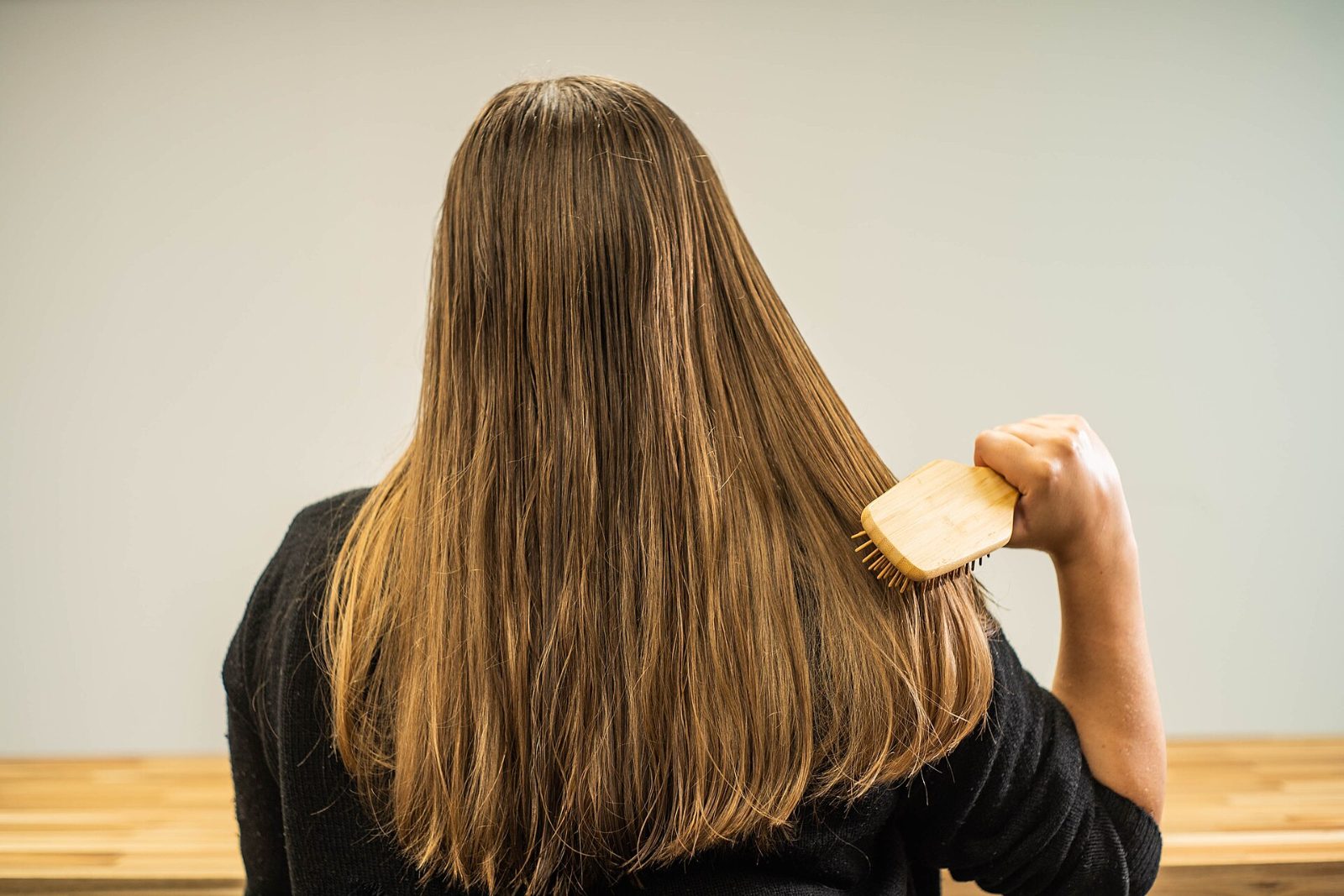
- Brush gently from the ends up, holding the hair near the root.
- Use sulphate-free shampoo and keep conditioner away from tapes and bonds.
- Dry the roots fully; damp attachments can lead to matting and odour, especially in humid weather.
- Use heat protection and moderate temperatures.
- Tie hair in a loose braid for sleep and for exercise.
- Rinse after swimming, or keep hair out of pool and sea water.
Ethical sourcing
Human hair comes from donors. Practices vary, and supply chains are often hard to trace. Some suppliers publish information about where and how hair is collected. If this matters to you, ask the salon or supplier directly and favour those who give specific answers.
Frequently asked questions
Can I colour human hair extensions?
Usually, if they are virgin or lightly processed. Have it done by a professional, and remember lightening extension hair weakens it.
Can I swim with human hair extensions?
You can, but chlorine and salt dry the hair and can loosen some attachments. Tie hair up, rinse straight after and condition the lengths.
Will extensions make my hair grow?
No. Extensions add length and volume but do not affect your own hair growth. Poorly fitted extensions can cause breakage or hair loss.
How can I tell human hair from synthetic?
A burn test on a couple of loose strands helps: human hair turns to ash, while synthetic fibre melts into a hard bead. Synthetic hair also tends to look shinier and feel slippery.
Sources: American Academy of Dermatology, British Association of Dermatologists, Dubai Municipality
Last reviewed: 2026-11-25. General information only, not medical advice. Please consult a licensed practitioner in the UAE about your own situation.