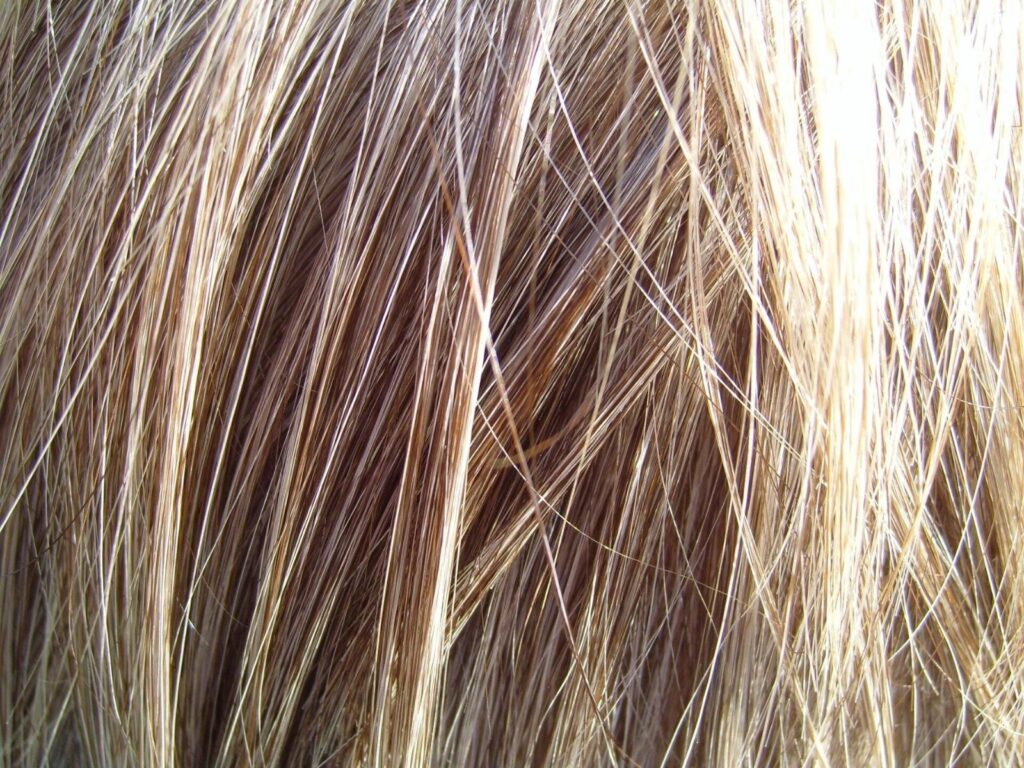

Russian hair extensions are human hair extensions sold as coming from donors in Russia or other Eastern European countries. The term usually means fine to medium strands with a soft natural wave, light to medium natural colour, and cuticles kept intact and aligned. That combination blends well with naturally fine or lighter hair. Because there is no official standard for the label, quality depends on the supplier, not the name.
What makes “Russian” hair different
Human hair varies in diameter, curl pattern, colour and density between people, and broad regional patterns exist. Hair marketed as Russian or Slavic is typically:
- Fine to medium in diameter, softer and lighter than many thicker hair types.
- Straight to softly wavy in its natural state.
- Naturally light in some batches, from dark blonde to brown, which means less bleaching is needed to reach light shades.
The quality terms that matter more than origin are Remy (cuticles kept and running in the same direction, which reduces tangling) and virgin (never chemically processed by colour or perm). A bundle can be Russian in origin and still be poorly processed, or come from elsewhere and be excellent.
How it compares with other hair types
| Type | Typical texture | Common use | Things to know |
|---|---|---|---|
| Russian / Slavic | Fine to medium, soft | Blending with fine European-type hair | Limited supply; often the priciest |
| European (general) | Fine to medium | Similar to Slavic | Label often loosely used |
| Indian | Medium, natural wave | Versatile, holds curl | Widely available |
| South-east Asian | Medium to thick | Volume, straight styles | Often processed to look finer |
| Chinese | Thick, straight | Coarser hair, volume | Usually heavily processed for lighter shades |
| Synthetic | Plastic fibre | Short-term, budget | Cannot be heat styled unless heat-friendly |
None of these is “best” in general. The right match is the one closest to your own hair texture and density.
How to check what you are buying
Questions to ask a supplier or salon
- Is the hair Remy, with all cuticles running in one direction?
- Is it virgin, or has it been coloured, bleached or permed?
- What is the source, and can the supplier explain their supply chain?
- Is each strand double drawn (most hairs the same length) or single drawn (natural taper)?
- What is the return policy if hair tangles or sheds heavily?
Simple checks at home:
- Feel the direction. Run fingers from root to tip, then tip to root. Remy hair feels smooth one way and slightly rougher the other.
- Wash a sample. Poor quality hair coated in silicone can feel silky at first and become dull and tangled after washing.
- Burn test a few strands. Human hair burns to ash and smells like burnt hair; synthetic fibre melts into a hard bead and smells like plastic.
Ask about Remy and virgin before you ask about origin: those two words predict how the hair will behave.
Attachment methods
Russian hair is offered in most formats:
- Keratin bonds (fusion): small strands attached with a heated keratin tip. Long-lasting, time-consuming to fit.
- Micro rings or nano rings: strands attached with tiny metal rings, no heat. Need regular moving up.
- Tape-ins: wide wefts attached with medical-grade tape. Quick to fit and reposition.
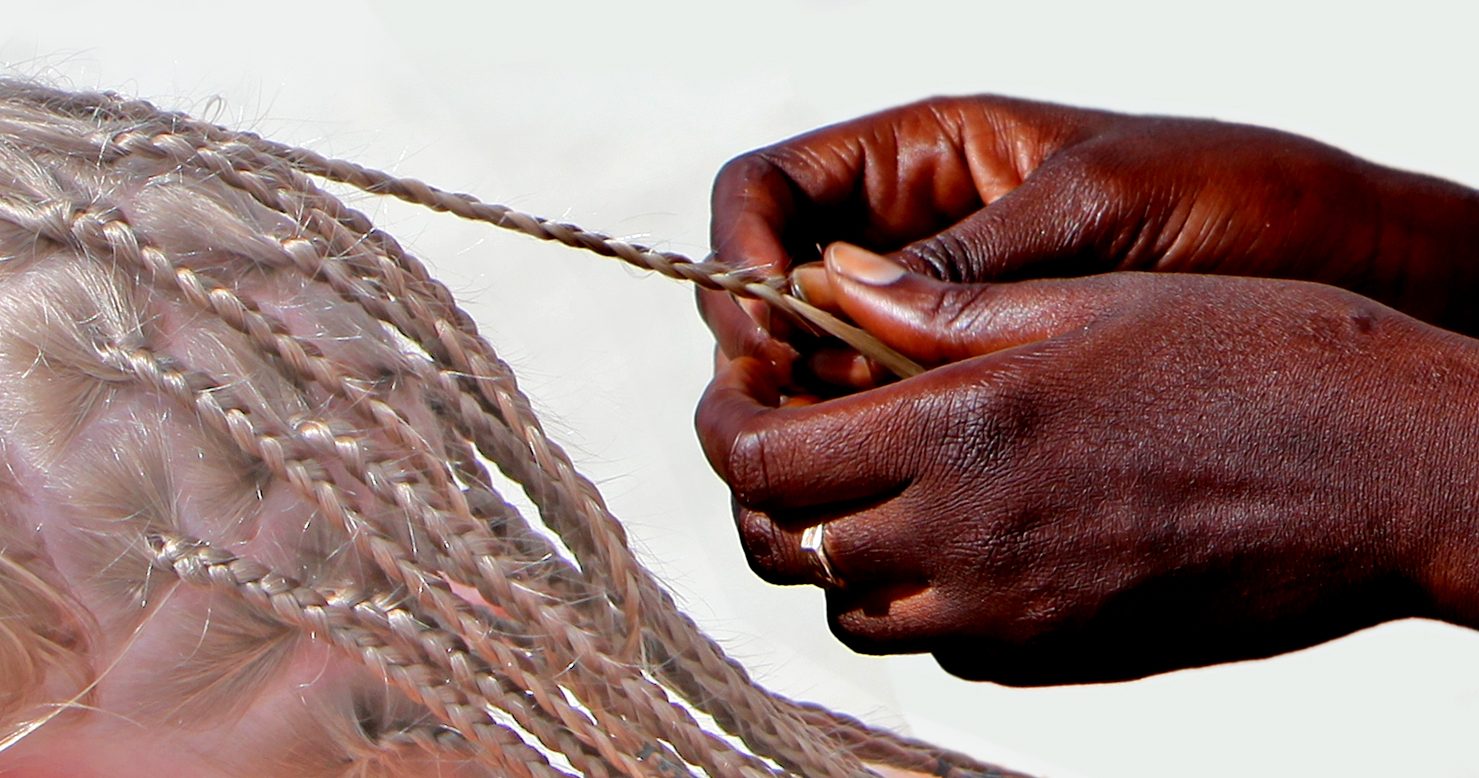
- Hand-tied or sewn wefts: rows of hair attached to a braid or bead line. Our article on weft hair extensions explains these.
- Clip-ins: temporary pieces you put in yourself.
The method should match your hair density and lifestyle. Very fine hair may not hold heavy wefts comfortably. A good stylist will also check the scalp for thinning first; extensions are not a fix for active hair loss, and tight attachments can cause traction alopecia.
Caring for extensions in the UAE
Heat, humidity, sun, pool chlorine and sea salt all affect extensions, and hard water can leave hair feeling dry.
UAE care routine
- Wash with a gentle sulphate-free shampoo and condition the lengths, avoiding the bonds or tape.
- Rinse after swimming in pools or the sea, or tie hair up and keep it out of the water.
- Use a heat protectant before blow-drying or straightening.
- Cover hair in strong midday sun to slow fading of lighter shades.
- Brush from the ends upward with a soft extension brush, holding the roots.
- Sleep with hair in a loose braid on a silk or satin pillowcase.
When extensions can harm your own hair
Extensions put extra weight and tension on your natural hair. Signs that they are causing damage include soreness at the attachment points, small bumps around the follicles, breakage near the root, and thinning at the hairline or temples. Remove them and see a dermatologist if you notice these, because traction alopecia caught early is usually reversible, while long-standing traction can cause permanent loss.
People with active hair loss, a sensitive or inflamed scalp, or allergies to adhesives should get advice before fitting. Ask for a patch test if tape or glue is used.
Price expectations
Russian and Slavic hair is generally among the more expensive extension options because of limited supply, but prices in the UAE vary widely with length, weight, method and salon. Compare quotes that list the grams of hair, the length, the method and the fitting and maintenance costs. See our guide on hair extensions for an overview of options.
Frequently asked questions
How long do Russian hair extensions last?
With good care, quality Remy hair can often be reused over several fittings. Bonds and tapes need maintenance every few weeks to a few months depending on the method.
Can I colour Russian hair extensions?
Virgin hair can be coloured by a professional. Going darker is easier than going lighter. Colouring already processed hair increases damage.
Are Russian extensions good for thin hair?
They are often chosen for fine hair because the texture blends well, but the attachment method and weight matter most. Ask for an assessment before fitting.
How can I tell if hair is really Russian?
You often cannot be sure. Focus on what you can check: Remy alignment, virgin status, a clear return policy and how the hair behaves after washing.
Sources: American Academy of Dermatology, British Association of Dermatologists, Dubai Municipality
Last reviewed: 2026-11-25. General information only, not medical advice. Please consult a licensed practitioner in the UAE about your own situation.