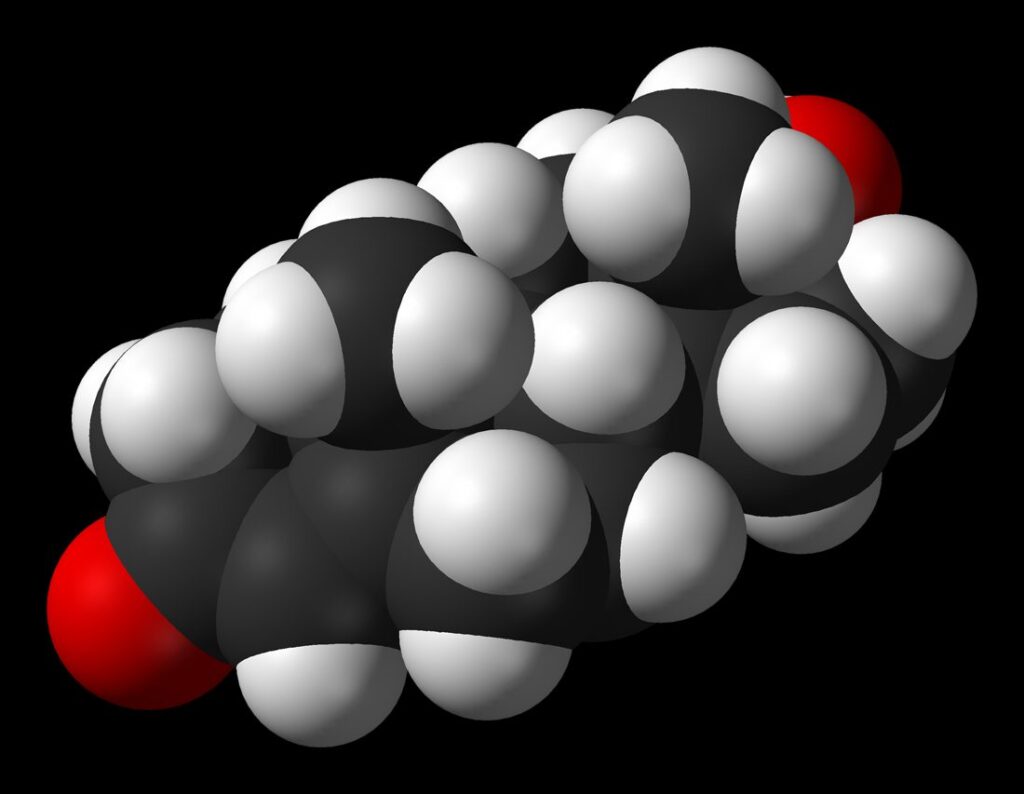

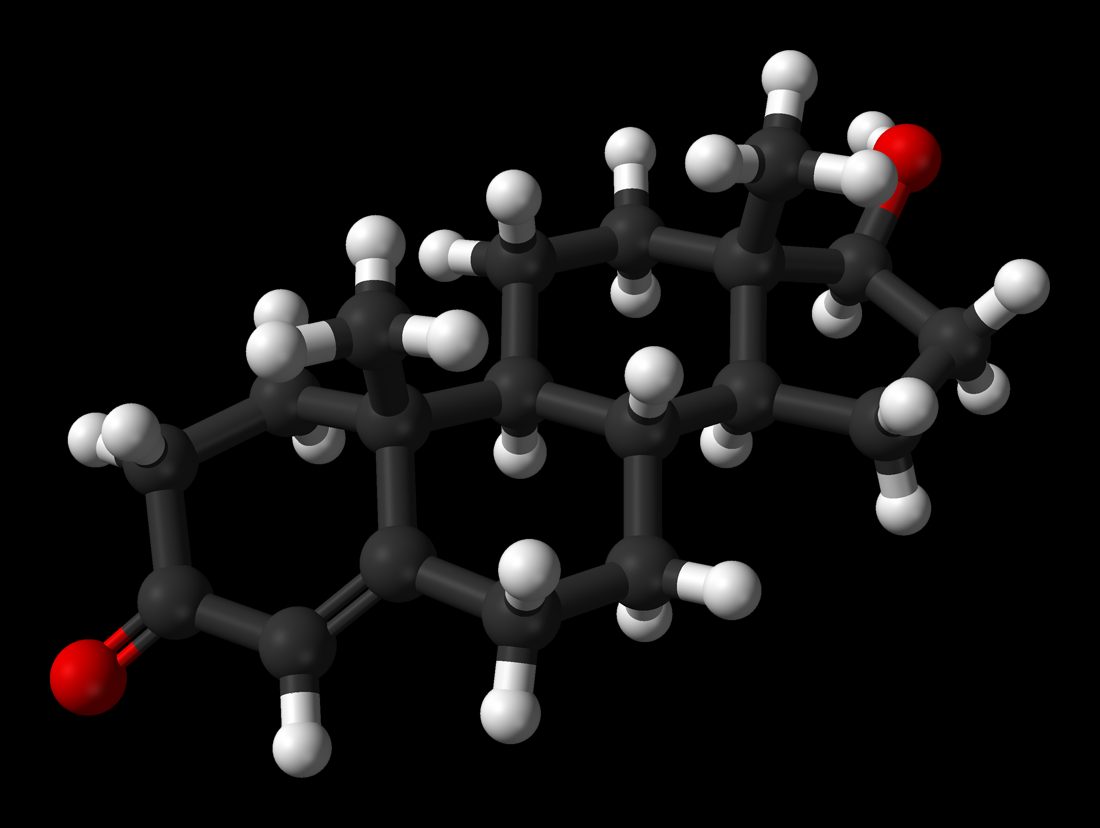
Testosterone is linked to hair loss, but not in the simple way many people assume. Pattern hair loss depends mainly on how sensitive your hair follicles are to DHT, a hormone made from testosterone, and that sensitivity is largely genetic. Men with ordinary testosterone levels can bald early, and men with high levels may keep their hair. Where testosterone does matter is when levels are pushed up from outside, for example with testosterone therapy or anabolic steroids, in someone already prone to thinning.
How testosterone relates to hair
Testosterone circulates in the blood in both men and women, at much higher levels in men. In certain tissues, including the scalp, an enzyme called 5-alpha reductase converts some testosterone into dihydrotestosterone, or DHT. DHT binds to receptors in hair follicles. In people with a genetic predisposition, follicles on the top and front of the scalp respond to DHT by gradually shrinking, a process called miniaturisation. Each new hair grows thinner and shorter until some follicles stop producing visible hair.
Follicles at the back and sides of the head are usually less sensitive, which is why the typical male pattern leaves a horseshoe of hair, and why that area is used as the donor zone in transplants. Our separate article on DHT and hair loss explains the hormone itself in more detail; this page focuses on testosterone levels, therapy and supplements.
Myths and facts
| Common belief | What is known |
|---|---|
| Bald men have more testosterone | Not necessarily. Follicle sensitivity, mostly inherited, matters more than blood levels |
| Low testosterone protects your hair | Not reliably; many men with normal or low levels still develop pattern loss |
| Working out raises testosterone and causes baldness | Normal exercise does not cause hair loss |
| Testosterone therapy always causes hair loss | No, but it may speed up loss in men who are already predisposed |
| Anabolic steroids are safe for hair if you stop | They can accelerate pattern loss; some effects may not reverse |
| Women do not have testosterone-related hair loss | Women can, especially with conditions that raise androgen levels |
Testosterone therapy
Testosterone replacement therapy (TRT) is prescribed for men with confirmed low testosterone and symptoms. Bringing levels into the normal range can, in men with a genetic tendency, contribute to faster pattern thinning, because more testosterone is available to convert to DHT. Not everyone notices a change.
If you are on or considering TRT and care about your hair:
- Tell your doctor about any family history of early balding
- Take baseline photos of your hairline and crown before starting
- Ask how your hair will be monitored and what options exist if thinning speeds up
- Do not start or adjust testosterone without medical supervision
Some medicines used for pattern hair loss work by reducing DHT. Whether they are suitable alongside TRT, and the possible side effects, is a decision for your doctor.
Testosterone and steroids bought without prescription
Products sold online or in gyms without a prescription may be counterfeit, wrongly dosed or contaminated. In the UAE, testosterone and anabolic steroids are controlled medicines. Beyond hair loss, misuse is associated with serious risks, including effects on the heart, liver, fertility, mood and blood. Speak to a licensed doctor instead.
Gym supplements and “test boosters”
Many over-the-counter “testosterone boosters” contain herbs, minerals and vitamins and generally do not raise testosterone dramatically. Their effect on hair is not well studied. Some products have been found to contain undeclared ingredients, which is a reason for caution. Creatine is a separate topic, covered in our article on creatine and hair loss. Ordinary whey protein does not contain hormones.

Women, testosterone and thinning
Women produce testosterone in the ovaries and adrenal glands. In some women, higher androgen levels or increased follicle sensitivity contribute to female pattern hair loss, typically thinning over the top of the scalp and a widening parting. Polycystic ovary syndrome (PCOS) is a common cause of raised androgens and may come with irregular periods, acne and increased facial or body hair. Menopause changes the balance between oestrogen and androgens, and thinning often becomes more noticeable around that time.
Women with these symptoms should see a doctor. Blood tests and a pelvic ultrasound are sometimes used to investigate PCOS, and treatment targets both the hormonal cause and the hair.
Signs that hormones may be involved in women
- Thinning over the top with the front hairline preserved
- Irregular or absent periods
- Persistent acne in adulthood
- New coarse hair on the face, chest or abdomen
- Rapid weight change
Other causes to rule out
Not all thinning in someone on hormones is hormonal. Thyroid disorders, iron deficiency, recent illness or surgery, crash dieting, major stress and certain medicines can all trigger shedding. A doctor may check blood tests before blaming testosterone. If you are unsure what pattern you have, our hair loss stages guide shows the common progression in men and women.
Your genes decide how your follicles respond to hormones. Testosterone is the fuel, not the switch.
What blood tests can and cannot show
Many people ask for a testosterone test to “explain” their hair loss. In men, a normal result does not rule out pattern hair loss, and a high-normal one does not prove it is the cause, because follicle sensitivity cannot be measured with a routine blood test. Hormone tests are most useful when there are other symptoms: in men, signs of low testosterone such as low energy and libido; in women, irregular periods, acne or excess hair growth. Your doctor will decide which tests are worth doing based on your history and examination.
Getting assessed in the UAE
An endocrinologist or urologist manages testosterone levels, while a dermatologist assesses the scalp and hair. For hair concerns, look for a dermatologist licensed by the DHA in Dubai, the DOH in Abu Dhabi or MOHAP elsewhere. If you are thinking about a transplant later, a surgeon will also want to know about any hormone therapy, since ongoing loss affects planning. Our graft count estimator is a rough starting point for that conversation.
FAQ
Does high testosterone make you go bald?
Not on its own. Baldness depends largely on inherited follicle sensitivity to DHT. Raising levels can speed up loss in people who are predisposed.
Will stopping testosterone therapy bring my hair back?
Some people see slowing of loss, but hair that has fully miniaturised may not return. Talk to your doctor before stopping any prescribed treatment.
Can women on testosterone lose hair?
Yes, especially those with a genetic tendency to pattern loss. A doctor can monitor and advise.
Do supplements that boost testosterone cause hair loss?
Evidence is limited. Unregulated products may contain hidden ingredients, so check with a doctor or pharmacist.
Sources: American Academy of Dermatology, NHS, MedlinePlus
Last reviewed: 2026-11-26. General information only, not medical advice. Please consult a licensed practitioner in the UAE about your own situation.