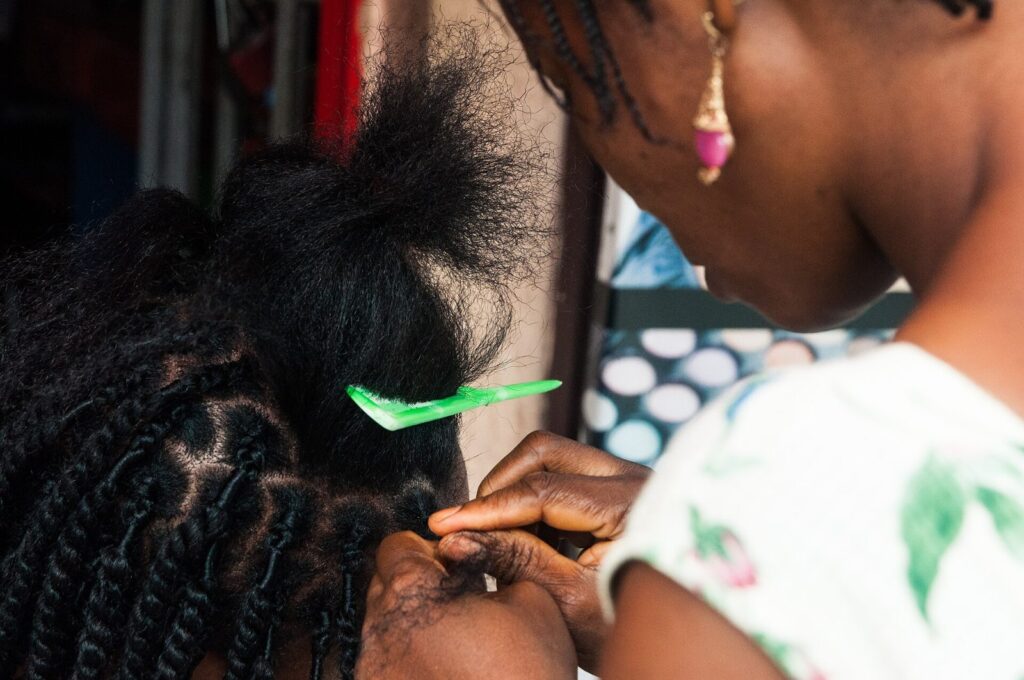

Weft hair extensions are strips of hair sewn or bonded together along a band, called the weft, which is then attached in rows to your natural hair. Instead of hundreds of individual strands, a few rows of weft add length and volume across the head. The main types are machine wefts, hand-tied wefts and newer thin flat wefts, fixed by sewing onto a braid, beading or with tape. Wefts suit people with medium to thick hair best and need refitting every several weeks as your hair grows.
Types of weft
| Weft type | How it is made | Feel at the root | Good for | Notes |
|---|---|---|---|---|
| Machine weft | Hair stitched onto a strip by machine | Thicker band | Thick hair, sew-ins, budget | Can be cut to size; strong |
| Hand-tied weft | Hair tied by hand onto a fine thread | Very thin, flexible | Natural look, fine to medium hair | Should not be cut, or ends must be sealed |
| Flat or “genius” weft | Thin, flat machine-made band, often with a short return hair | Thin and flat | Comfortable, cuttable | Newer style; names vary by brand |
| Tape weft | Short wefts with adhesive tape | Flat | Quick fitting | Covered in our human hair guide |
| Clip-in weft | Wefts with sewn-on clips | Removable | Occasional wear | Self-applied at home |
All of these can be made from human or synthetic hair. Our guides to human hair extensions and synthetic hair extensions cover the material choice.

How wefts are attached
Sew-in on a braid
Your natural hair is braided flat against the scalp in a horizontal row (cornrow), and the weft is sewn onto the braid with a needle and thread. This is common for thicker and textured hair and can sit for several weeks.
Beaded row (micro-bead weft)
A row of small silicone-lined beads is clamped onto small sections of your hair, and the weft is sewn onto that bead row. No braid or glue is used. Popular names include beaded weft and hand-tied bead method.
Tape
Short wefts with adhesive are sandwiched around thin sections of hair. Quick, but limited to flat placement.
Clips
Clip-in wefts are put in and taken out at home. They avoid long-term tension but should not be slept in.
The weft decides how the extension looks; the attachment decides how your own hair copes.
Who suits wefts
Wefts are often a good fit if you
- Have medium to thick hair that can hide a row and carry its weight.
- Want a lot of volume and length with fewer attachment points.
- Can commit to regular maintenance appointments.
- Prefer no heat or glue (sew-in and beaded methods).
Wefts are less suitable for very fine hair, a sensitive scalp, or any active hair loss. Thin hair may show the rows and struggle with the weight. A stylist should check your hair density and scalp before recommending them, and anyone with thinning should see a doctor first.
Maintenance timeline
Typical upkeep
- Every 6 to 8 weeks: move-up appointment as your hair grows and the rows slide down.
- Daily: brush from ends to roots while supporting the row.
- Every wash: dry the rows fully, as damp braids and threads can smell and mat.
- Every few months: hair quality check; good human hair wefts can often be reused several times.
Leaving wefts in far longer than advised lets your shed hairs collect at the row and form matting, which can be painful to remove and cause breakage.
Care in the UAE climate
- Humidity and sweat at the scalp can make rows itchy. Wash on a regular schedule and dry the roots with cool air.
- Rinse after swimming and avoid long soaks in chlorinated pools.
- Protect lengths from strong midday sun to slow colour fading.
- Use heat protection and moderate temperatures on human hair wefts.
- Sleep with hair in a loose low braid and use a silk or satin pillowcase.
Protecting your scalp and hair
Signs the rows are too tight or heavy
- Pain, pulling or headaches after fitting that do not settle within a day or two.
- Red bumps, pustules or crusting along the rows.
- Breakage at the roots or visible thinning where rows sit.
- Hair loss at the hairline or temples.
These can be early signs of traction alopecia or folliculitis. Ask for the rows to be loosened or removed, and see a dermatologist if symptoms persist. Long-term traction can cause permanent hair loss, so it is worth acting early. Use our hair loss stages guide if you are noticing thinning.
Your first appointment
A good weft fitting starts with a consultation, often a day or more before the fitting itself. The stylist should look at your hair density, texture and scalp, ask about your routine and any hair loss, and colour-match the weft to your hair in daylight. Many stylists suggest a strand or patch test if any adhesive is involved.
On the day, expect the fitting to take a few hours depending on the number of rows and the method. Once the rows are in, the stylist cuts and blends the extension hair into your own so the ends do not look blunt. Before you leave, ask them to show you how to brush around the rows, how to section for washing and how to tie your hair for sleep. Book the first move-up appointment before you go, so the rows are not left in too long.
Cost factors
In the UAE, weft prices depend on the hair quality and grams, length, the number of rows, the attachment method, the stylist’s experience and maintenance appointments. Hand-tied wefts and beaded methods usually cost more to fit than simple sew-ins. Ask for a written breakdown of hair cost, fitting fee and move-up fees. See our overview of hair extensions for comparison with other methods.
Frequently asked questions
How long do weft hair extensions last?
The fitting usually lasts 6 to 8 weeks before a move-up. Good quality human hair wefts can often be reused for several fittings with proper care.
Can I cut hand-tied wefts?
Generally not, as the hand-tied thread can unravel. Some stylists seal the ends; ask before cutting. Flat or genius wefts are usually designed to be cut.
Do weft extensions damage hair?
They can if too heavy, too tight or left in too long. Correct fitting and regular maintenance reduce the risk.
Can I wash my hair normally?
Yes, with gentle shampoo, but focus on cleaning the scalp between rows and drying the rows thoroughly afterwards.
Sources: American Academy of Dermatology, British Association of Dermatologists, Dubai Municipality
Cover photo: Adaku Nwakanma, CC BY-SA 4.0. Last reviewed: 2026-11-25. General information only, not medical advice. Please consult a licensed practitioner in the UAE about your own situation.