

Hand-tied weft hair extensions are thin curtains of hair knotted by hand onto a fine thread, then attached to a row of small beads or a braid along your own hair. They lie flatter and are more flexible than machine wefts, so they suit people who want volume and length with a low profile, but they need regular move-ups and careful fitting to avoid strain on the follicles.
How hand-tied wefts differ from machine wefts
Both are long horizontal strips of hair, but they are made differently. A machine weft is stitched along a thicker seam, which makes it strong and cuttable but slightly bulkier at the top. A hand-tied weft is made by knotting small bundles of hair onto a thin thread. The result is a very thin, soft top edge that bends with the head.
| Feature | Hand-tied weft | Machine weft |
|---|---|---|
| Top edge | Very thin and flexible | Thicker stitched seam |
| Cutting to length | Usually should not be cut, or the knots can unravel | Can generally be cut to fit |
| Comfort when lying flat | Often described as more comfortable | Can feel more noticeable for some people |
| Shedding at the seam | Can shed if handled roughly | Seam is sturdy |
| Best for | Fine to medium hair wanting discreet volume | Thicker hair and larger volume changes |
Our general guide to weft hair extensions covers all weft types. This page focuses on the hand-tied option and what living with it involves.
How they are fitted
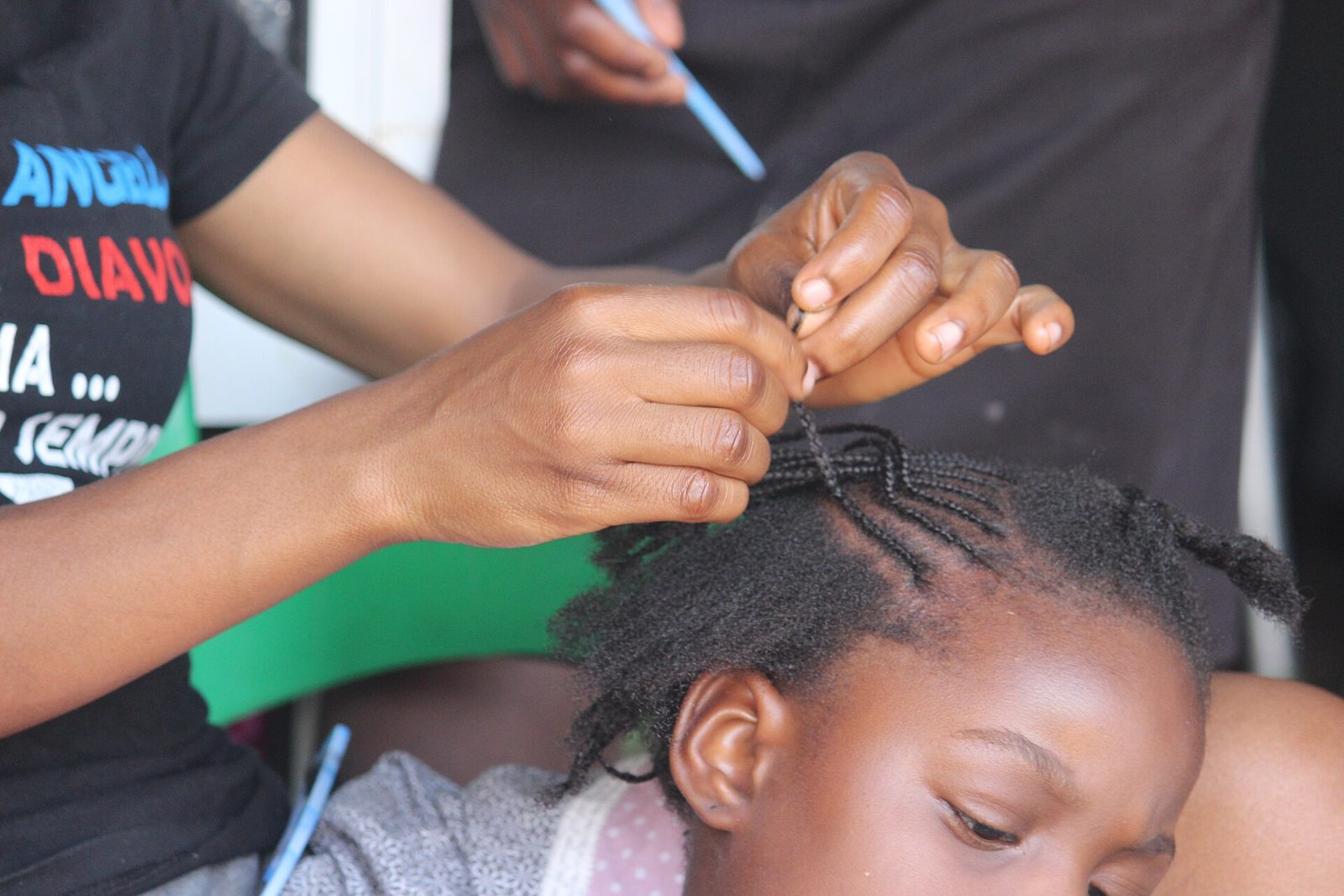
Most stylists use a beaded row method. A horizontal section of your hair is parted, then a line of small silicone-lined beads is clamped onto small sections of your own hair. The hand-tied weft, sometimes stacked two or three wefts thick, is then sewn onto that row of beads with thread. Some methods use a small braid instead of beads.
The number of rows depends on how much volume you want and how much natural hair you have to hide each row. Fitting a full head can take several hours. A skilled stylist will place rows where your own hair can cover them when you wear it down and in a ponytail.
Who they suit and who should wait
Hand-tied wefts suit people with fine to medium hair who want a noticeable change in fullness without the bulk of thicker wefts. They are a popular choice for adding volume across the back of the head rather than strand-by-strand length.
Not a good idea right now if
- You are losing hair actively or have patches of thinning
- Your scalp is irritated, itchy or flaking
- You have had a recent scalp procedure or hair transplant
- Your hair is extremely fine at the crown, with little to anchor beads to
Rows put tension on a line of small sections, so too much weight on too little hair can cause traction alopecia. If you are not sure whether your thinning is a temporary shed or a pattern, look at our hair loss stages overview and get it checked by a dermatologist first.
Maintenance and move-ups
As your hair grows, the beads move down. At a move-up appointment, usually every six to eight weeks depending on growth, the stylist cuts the thread, opens the beads, re-places them close to the root and sews the wefts back on. Good hand-tied hair can often be reused for several cycles if it is cared for.

Between visits:
- Brush gently twice a day with a soft extension brush, holding the hair just below the row
- Wash with a sulphate-free shampoo, working cleanser into the scalp between rows
- Condition only from mid-length to ends, never onto the beads
- Dry the rows completely after washing or sweating to prevent matting
- Sleep with hair in a loose braid or on a silk pillowcase
In UAE summers, sweat and humidity can make rows feel heavier and itchier. Rinse after the gym, dry the rows fully and avoid leaving hair tied up tightly while damp.
Do not cut the weft at home
Hand-tied wefts are usually not meant to be cut across the top, because the knots can unravel. If a weft feels too wide, let your stylist adjust the placement rather than trimming it yourself.
Choosing hair and colour
Hand-tied wefts are almost always made from human hair, and quality varies a lot. Hair described as Remy or cuticle-aligned keeps the cuticles facing one direction, which reduces tangling. Ask where the hair comes from, whether it has been heavily processed, and how it behaves after colouring. Lightly processed hair usually lasts longer through repeated washing in hot weather.
Colour matching is best done in daylight rather than under salon spotlights. Many people blend two or three shades so the extensions mimic natural highlights. If you plan to colour your own hair soon, do it before the fitting so the match stays accurate, and ask whether the extension hair can be toned later.
Costs to plan for
Prices in the UAE vary by salon, the number of rows, the length and grade of hair and the stylist’s training. Because the hair can often be reused, the main ongoing cost is move-up appointments. Ask for a written quote for the hair, the first fit, each move-up and removal, and compare those totals over twelve months rather than looking only at the first visit.
With hand-tied wefts, the move-ups decide your long-term cost and the health of your hair more than the first fitting.
Warning signs to act on
See your stylist promptly if a row feels painful, pulls when you move your head, or if you notice bumps along a row. See a doctor, such as a dermatologist licensed by the DHA, DOH or MOHAP, if you develop redness that spreads, pus, swelling, persistent itching, a rash or new bald patches. These may need medical treatment, and the extensions may need to come out.
FAQ
How long do hand-tied wefts last?
The rows need moving up roughly every six to eight weeks. The hair itself can often last several months with good care, depending on quality and how it is treated.
Can I wear my hair up with hand-tied wefts?
Often yes, if the rows were placed for it. Discuss the styles you wear most so the stylist can place rows to hide them.
Are hand-tied wefts better than tape-ins?
Neither is better for everyone. Wefts give more volume per row, while tape-ins can suit very fine hair. Your density and lifestyle decide.
Do the beads damage hair?
Beads that are too tight, too heavy for the section or left too long between move-ups can cause breakage. Correct sizing and regular maintenance reduce that risk.
Sources: American Academy of Dermatology, NHS, Dubai Health Authority
Last reviewed: 2026-11-26. General information only, not medical advice. Please consult a licensed practitioner in the UAE about your own situation.