
DHT (dihydrotestosterone) is a hormone made from testosterone that plays a central role in male and female pattern hair loss. In people whose scalp follicles are genetically sensitive to it, DHT gradually shrinks those follicles so they produce thinner, shorter hairs until some stop producing visible hair. Lowering DHT activity, or supporting the follicles in other ways, is the basis of several treatments that a doctor can discuss with you.
What DHT is and where it comes from
Testosterone is converted into DHT by an enzyme called 5-alpha reductase, which is found in tissues including the skin, hair follicles and prostate. DHT is a more potent androgen than testosterone. It has important roles in male development, such as forming male genitalia before birth and body hair changes at puberty.
Everyone has some DHT, including women, who produce smaller amounts. Having DHT is normal. What differs between people is how sensitive their scalp follicles are to it, which is largely inherited.
How DHT causes thinning
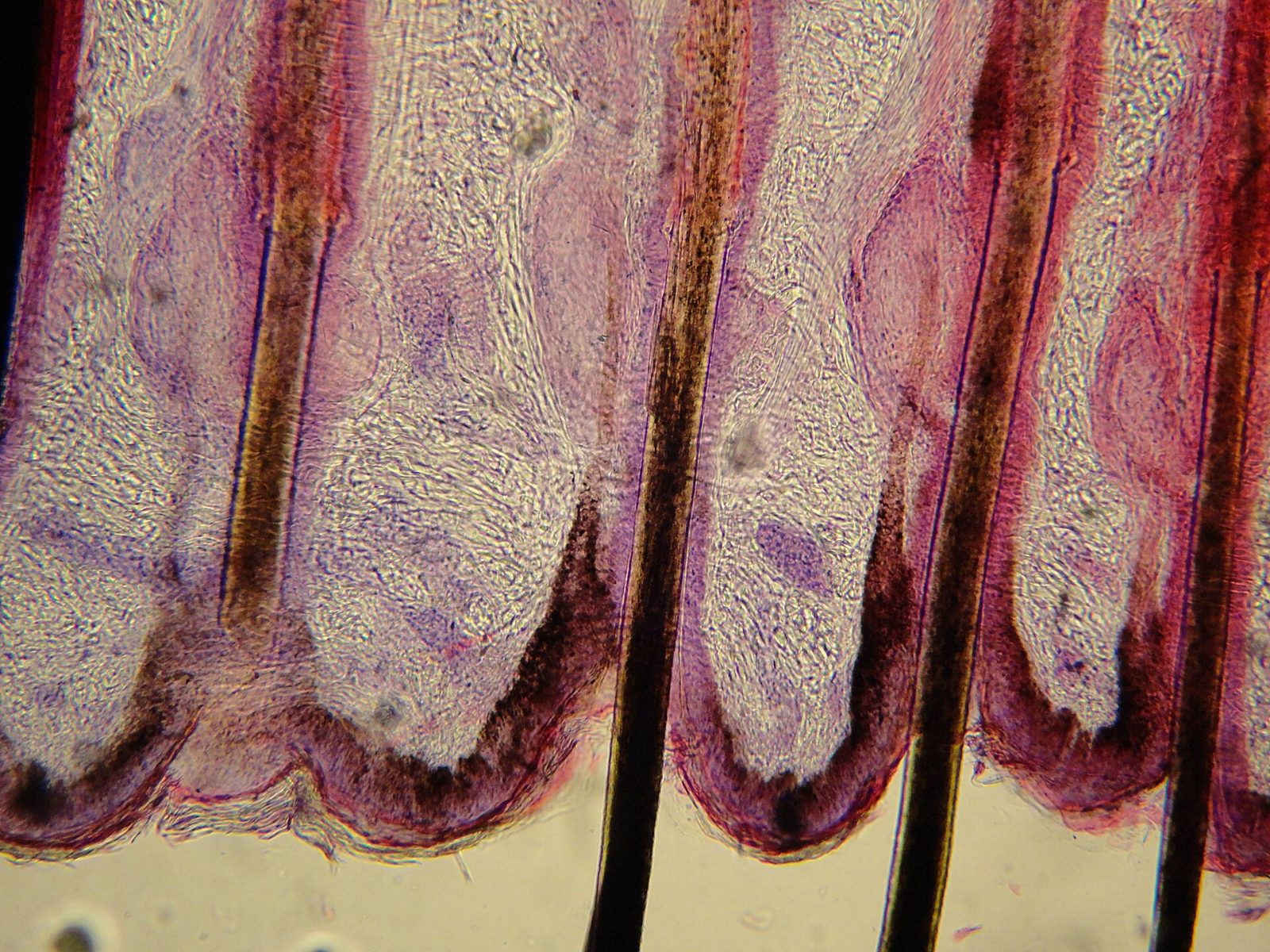
In genetically susceptible follicles, mainly on the top and front of the scalp, DHT binds to androgen receptors and changes the hair cycle. Over many cycles:
- The growing phase (anagen) becomes shorter.
- The follicle becomes smaller, a process called miniaturisation.
- Hairs grow thinner, lighter and shorter.
- Eventually some follicles produce only tiny, almost invisible hairs.
Follicles at the back and sides of the head are usually less sensitive to DHT. That is why they are used as donor hair in transplants, and why transplanted hair tends to keep its resistance in its new location.
Pattern hair loss in men and women
| Typical pattern | Receding temples, thinning crown, can progress to the top | Widening parting, diffuse thinning on top, frontline often kept |
|---|---|---|
| Common scale | Norwood (Hamilton-Norwood) | Ludwig, Sinclair or Savin scales |
| Role of DHT | Well established | Involved in many cases, but other factors matter too |
| Usual onset | From late teens onward | Often after menopause, can start earlier |
You can see the stages described in our hair loss stages guide. Women with sudden or patterned hair loss alongside acne, irregular periods or extra facial hair may need tests for hormonal conditions such as polycystic ovary syndrome, which a doctor can arrange.
Myths about DHT
Common misconceptions
- High testosterone means more hair loss. Not necessarily. Follicle sensitivity matters more than hormone levels in most people with pattern loss.
- Hats cause hair loss. Wearing a cap or ghutra does not cause pattern hair loss, though very tight headwear that pulls hair can cause traction loss.
- DHT-blocking shampoos alone stop hair loss. Evidence for most shampoos is limited compared with medical treatments.
- Hair loss always skips a generation or comes from the mother’s side. Inheritance involves several genes from both parents.
Treatment options a doctor may discuss
Treatment should be chosen with a doctor who can confirm the diagnosis and check for other causes. Options commonly discussed include:
Medicines that reduce DHT production. Finasteride and dutasteride block 5-alpha reductase. Finasteride is used for male pattern hair loss. These medicines are not suitable for everyone, have possible side effects that should be discussed in detail, and must not be handled or used by women who are or may become pregnant because they can affect a male fetus. Whether and how to use them is a decision for a doctor.
Topical anti-androgens. Clascoterone is a newer topical anti-androgen that has been studied for scalp hair loss. Our article on clascoterone covers what is known so far.
Minoxidil. Minoxidil does not block DHT. It is thought to prolong the growing phase and enlarge follicles. Topical forms are widely used; oral forms are prescribed by some doctors. It can be combined with other treatments under medical guidance.
Other approaches. Low-level laser therapy, platelet-rich plasma and microneedling are used by some clinics, with varying evidence. Hair transplant surgery can move DHT-resistant follicles to thinning areas, but it does not stop ongoing loss of native hair, so medical treatment is often discussed alongside it.
Treatments work best when started early, while follicles are still producing some hair. Fully inactive follicles are much harder to revive.
Who should be cautious
Discuss carefully with a doctor if you
- are a woman who is pregnant, trying to conceive or breastfeeding; several hair loss medicines are not suitable
- have a history of depression, low mood or sexual health concerns
- have liver disease or prostate problems, or are having PSA tests (finasteride can lower PSA readings, which your doctor needs to know)
- have heart or blood pressure conditions and are considering oral minoxidil
- are under 18

When hair loss may not be DHT
Not all thinning is pattern hair loss. See a doctor promptly for:
- sudden shedding of large amounts of hair
- round bald patches, which can be alopecia areata
- scalp redness, scaling, pain, pus or scarring
- hair loss with fatigue, weight change, heavy periods or feeling unwell
- loss of eyebrows, eyelashes or body hair
Blood tests for iron, thyroid function and other factors may be needed. In the UAE, consultant dermatologists in DHA, DOH or MOHAP licensed facilities can assess the scalp and confirm the diagnosis.
Living with pattern hair loss
Pattern hair loss is common and medically harmless, but it can affect confidence. Some people treat it, others choose shorter haircuts, scalp micropigmentation or simply let it be. All of those are valid choices. If you do treat it, give each approach enough time, often six months or more, before judging results, and take regular photos in the same light to track changes. If you are considering surgery, our graft estimate table helps you understand the scale of a procedure.
Frequently asked questions
Can I test my DHT level to predict hair loss?
Blood DHT levels do not reliably predict pattern hair loss, because follicle sensitivity matters more. Diagnosis is usually clinical.
Do natural DHT blockers like saw palmetto work?
Evidence is limited and of lower quality than for approved medicines. Tell your doctor about any supplements you take.
Will stopping treatment cause hair loss?
For many treatments, gains are gradually lost after stopping because the underlying tendency continues.
Does DHT affect beard growth?
Yes. DHT supports beard and body hair growth while thinning scalp hair in sensitive follicles.
Sources: American Academy of Dermatology, NHS, British Association of Dermatologists
Last reviewed: 2026-11-25. General information only, not medical advice. Please consult a licensed practitioner in the UAE about your own situation.