

Semi-permanent hair extensions are attached to your own hair with bonds, beads, tape or sewn wefts and stay in for weeks or months rather than coming out at night like clip-ins. They sit between temporary clip-ins and permanent options, and the right one depends on your hair density, your budget for maintenance visits and how your scalp copes with heat and sweat in the UAE.
What counts as semi-permanent
The phrase is used loosely in salons, so it helps to be precise. A semi-permanent extension is one that a stylist fits and removes, and that you wear continuously, including while sleeping, showering and exercising. It is not glued to the scalp and it does not grow with you. Your natural hair keeps growing, so the attachment point slowly moves away from the root and the extensions need moving up, re-taping or replacing on a regular schedule.
That maintenance cycle is the real difference from clip-ins. With clip-ins you control everything at home. With semi-permanent methods you are committing to salon appointments, and the long-term cost and the health of your own hair both depend on how regularly you keep them.
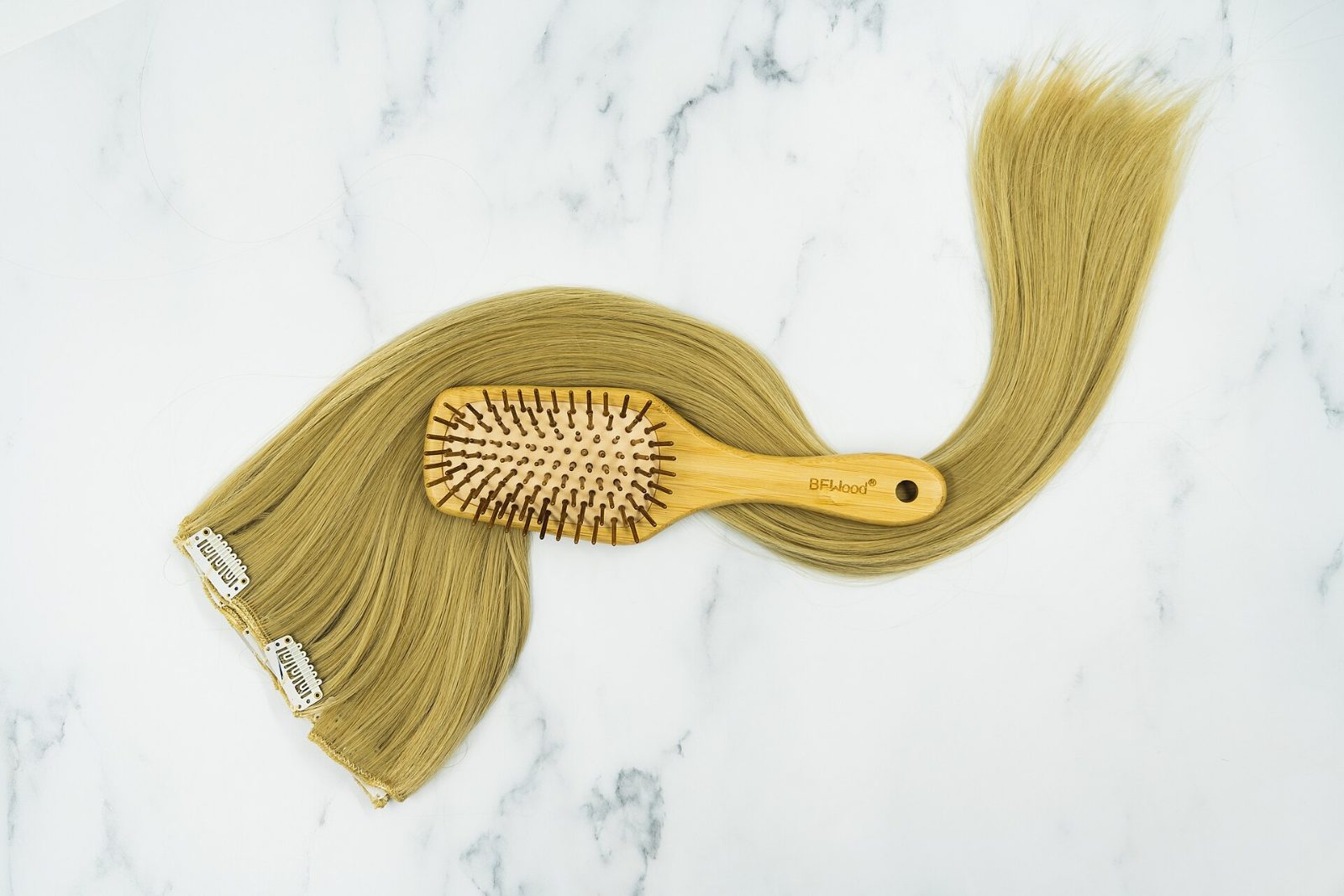
The main methods compared
Most semi-permanent systems fall into four families. They differ in how the hair is held, how visible the attachment is and how much tension it puts on your own strands.
| Method | How it attaches | Typical wear before refit | Best suited to |
|---|---|---|---|
| Tape-ins | Thin adhesive panels sandwich a section of your hair | Around 6 to 8 weeks | Fine to medium hair wanting a flat, discreet finish |
| Keratin bonds (K-tips) | Small bonds melted onto individual strands | Often 3 to 4 months | Medium to thick hair, people wanting 360 degree movement |
| Micro rings or I-tips | Strands threaded through a tiny metal or silicone bead | Around 6 to 10 weeks | Those who want no heat or glue |
| Sewn or hand-tied wefts | A row of hair sewn onto a braid or bead track | Around 6 to 8 weeks | Thicker hair and big volume changes |
These wear times are general ranges reported by stylists, not guarantees. Fast-growing hair, frequent washing and heavy styling all shorten them. Ask your stylist what they expect for your hair specifically.
Who suits semi-permanent extensions
They work well if you want length or volume every day, you have enough natural density to hide the attachments, and you can commit to regular visits. They also suit people who find daily clip-in fitting fiddly or who want to exercise and swim without worrying about a clip slipping.
Think twice if any of these apply
- You have active hair loss, patchy thinning or a diagnosed scalp condition
- Your scalp is sore, itchy or flaking at the moment
- You have recently had chemotherapy, a hair transplant or a scalp procedure
- Your own hair is very fine and breaks easily
In those situations extra weight and tension on the follicles can make things worse. A dermatologist or a trichologist can tell you whether your hair can safely carry extensions. If you are unsure about the pattern of thinning you have, the hair loss stages guide on this site explains the common patterns.
Living with them in the UAE climate
Heat and humidity change how extensions behave. Sweat at the hairline can soften tape adhesive, and the salt and minerals in sweat build up around bonds and beads. Many people in Dubai and Abu Dhabi also wash more often in summer, which speeds up wear on tape and keratin.
A few habits help:
- Rinse sweat out after the gym or a long outdoor day rather than leaving it to dry in the roots
- Dry the attachment area fully, since damp bonds sitting under a ponytail can matt
- Use a heat protectant before hot tools and keep straighteners away from bonds and tape
- Cover your hair or rinse with fresh water after the pool or the sea, as chlorine and salt both dry the lengths
Hard water is common in parts of the UAE. Some people notice extensions feel rougher and tangle more, and a shower filter or a periodic clarifying wash suggested by your stylist can help.
Fitting, maintenance and removal
The first appointment usually takes several hours depending on the method and the number of strands or wefts. A good stylist will check your hair density, match colour in daylight and section carefully so no single attachment carries too much hair.
Maintenance visits move the attachments back up towards the root. For tape-ins this means removing the panels, cleaning off old adhesive and re-taping. For micro rings and wefts the beads are opened and moved. Keratin bonds are usually removed and replaced rather than moved.
Removal should always be done by a trained professional with the correct remover. Pulling out bonds or tape yourself is one of the most common causes of breakage. Expect some shed hair to come out at removal. This is the natural hair you would have lost over the weeks anyway, held in place by the extension.
Questions worth asking before you book
- Which method do you recommend for my density, and why?
- What is the source and quality grade of the hair?
- How often will I need maintenance, and what does each visit involve?
- Can I see your work on someone with hair like mine?
- What products should I use at home?
Cost factors
Prices in the UAE vary widely between salons and depend on the method, the length and weight of hair, whether the hair is reused at maintenance and the stylist’s experience. Rather than relying on a single quoted figure, ask for a written breakdown covering the hair itself, the fitting, each maintenance visit and the final removal. Over a year, maintenance often costs more than the first fitting, so compare the full picture.
The cheapest fitting is rarely the cheapest year: compare maintenance and removal, not just the first appointment.
Risks and warning signs
The main medical risk is traction alopecia, hair loss caused by constant pulling on the follicles. Early signs include tenderness at the attachment points, small bumps around the follicles, and thinning along the hairline or where the heaviest attachments sit. Caught early it often recovers once the tension is removed. Left for a long time it can become permanent.
Other problems include matting near the root, allergic reactions to adhesives and scalp irritation or infection. See a doctor promptly if you notice spreading redness, pus, pain, swelling, a rash spreading beyond the scalp, or bald patches. Dermatologists licensed by the DHA in Dubai, DOH in Abu Dhabi or MOHAP elsewhere can assess this.
FAQ
How long do semi-permanent extensions last overall?
Good-quality human hair can often be reused across several maintenance cycles, while the attachment itself needs refitting every few weeks to few months depending on the method. Your stylist can judge when the hair itself needs replacing.
Can I swim and go to the gym with them?
Yes, most people do. Tie hair loosely, rinse after chlorine, salt water or heavy sweat, and dry the roots fully to avoid matting.
Are semi-permanent extensions safe for thin hair?
Sometimes, with lightweight methods and fewer, smaller attachments. If your thinning is recent or patchy, get it assessed by a doctor first.
Do they damage natural hair?
They can if fitted too tightly, left too long between visits or removed at home. Correct fitting, regular maintenance and professional removal keep the risk lower.
Sources: American Academy of Dermatology, NHS, Dubai Health Authority
Cover photo: David Goodall, CC BY-SA 2.0. Last reviewed: 2026-11-26. General information only, not medical advice. Please consult a licensed practitioner in the UAE about your own situation.