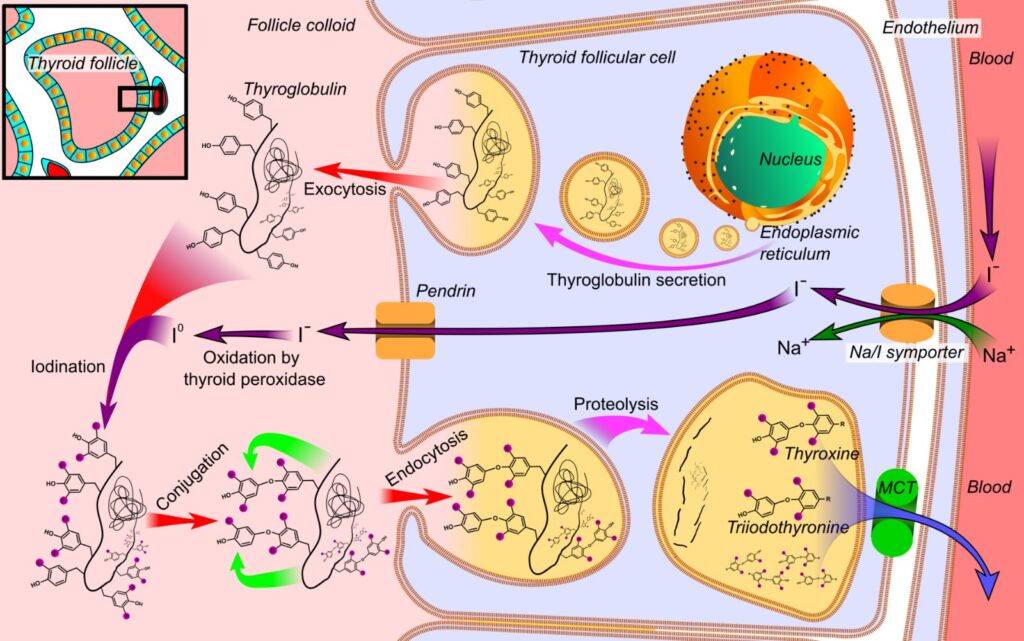

Both an underactive thyroid (hypothyroidism) and an overactive thyroid (hyperthyroidism) can cause diffuse hair thinning, usually as shedding across the whole scalp rather than a bald patch. The good news is that thyroid-related hair loss often improves once thyroid levels are brought back into the normal range, although regrowth takes months and other causes sometimes overlap.
How the thyroid affects hair
The thyroid is a small gland at the front of the neck. Its hormones help set the pace of many processes in the body, including how quickly cells in hair follicles divide. Hair grows in cycles: a long growing phase, a short transition, a resting phase, then shedding. When thyroid hormone is too low or too high for a long time, more follicles can be pushed into the resting phase at once. A few months later, those hairs shed together and the hair feels noticeably thinner.
This is why thyroid hair loss often appears with a delay. The shedding you notice now may reflect changes that started months earlier.
What thyroid hair loss looks like
Typical features include:
- more hair than usual in the shower, on the pillow or in the brush
- overall thinning across the scalp rather than a clear pattern
- hair that feels drier, coarser or more brittle, particularly with an underactive thyroid
- in some people, thinning of the outer third of the eyebrows, which has long been linked with hypothyroidism, although it is not specific to it
- thinning of body hair
Thyroid problems can also occur alongside alopecia areata, an autoimmune condition that causes round bald patches, because autoimmune conditions tend to cluster. Patchy loss needs a doctor’s assessment.
Underactive vs overactive: other signs
| Energy | Tiredness, slowness | Restlessness, anxiety, poor sleep |
|---|---|---|
| Weight | Weight gain or difficulty losing weight | Weight loss despite good appetite |
| Temperature | Feeling cold | Feeling hot, sweating, heat intolerance |
| Heart | Slower pulse | Fast or irregular heartbeat, palpitations |
| Skin and hair | Dry skin, coarse hair | Fine, thin hair, warm moist skin |
| Other | Constipation, low mood, heavy periods | Tremor, frequent bowel movements, lighter periods |
Not everyone has all of these, and many symptoms overlap with other conditions. Feeling unusually hot or tired is easy to blame on the UAE summer or long working hours, which is one reason thyroid problems can go unnoticed for a while.
Tests your doctor may order
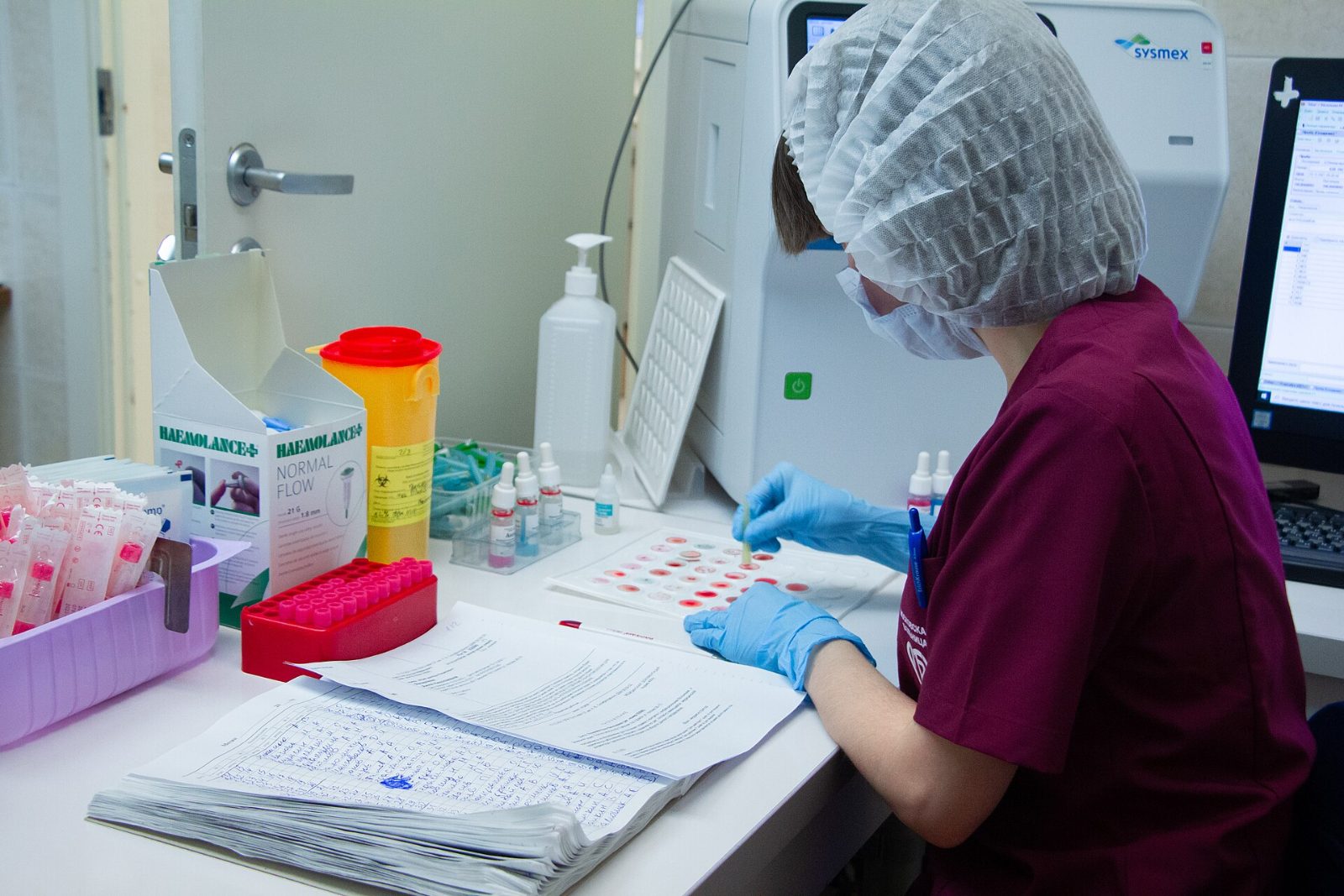
If thyroid disease is suspected, a doctor usually starts with blood tests:
- TSH (thyroid stimulating hormone): the main screening test.
- Free T4, and sometimes free T3: the thyroid hormones themselves.
- Thyroid antibodies: can show autoimmune causes such as Hashimoto’s thyroiditis or Graves’ disease.
Because hair shedding often has more than one cause, doctors frequently check other things at the same time, such as a full blood count, ferritin (iron stores), vitamin D and sometimes other vitamins or hormones. In the UAE, vitamin D deficiency is common despite the sunshine, because many people spend most of the day indoors and cover up outside.
Which doctor to see
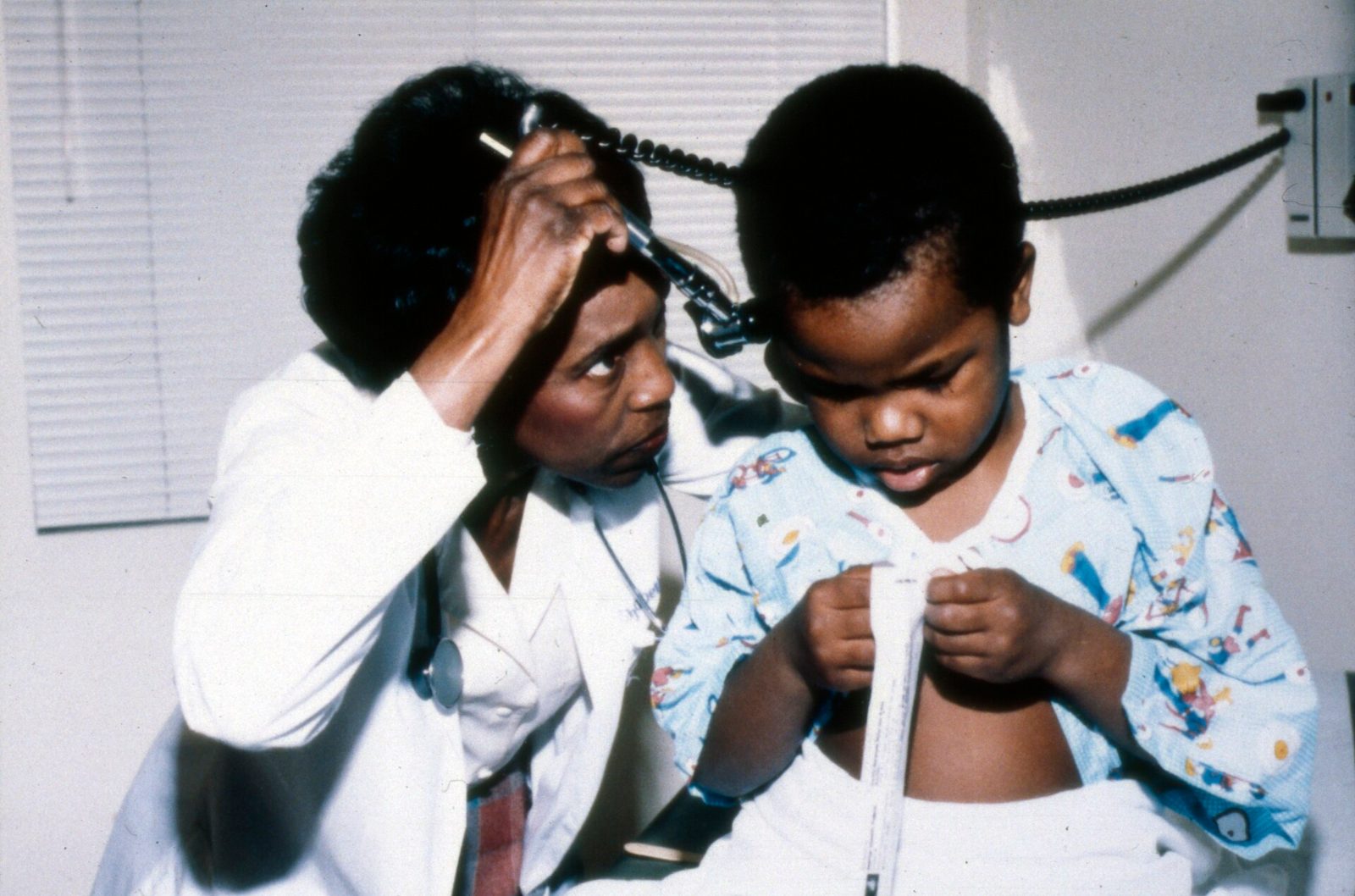
A general practitioner or family medicine doctor can usually order the first tests. An endocrinologist manages thyroid disease, and a dermatologist assesses the hair and scalp itself. Our guide on which doctor to consult for hair loss explains the referral path in more detail.
Treatment and what happens to the hair
Thyroid conditions are treated by doctors with medication or other therapies depending on the cause. Treatment choices and doses are individual and must be decided and monitored by your doctor. Never start, stop or change thyroid medication on your own.
Once thyroid levels return to the target range, the hair cycle usually begins to normalise. Shedding commonly slows first, then new short hairs appear, then length and density gradually return. Because hair grows slowly, it often takes several months to notice improvement and longer to regain fullness.
Thyroid hair loss usually improves after treatment, but hair moves slowly. Think in months, not weeks.
Some people notice extra shedding in the first weeks or months after starting or changing treatment. This can happen as the hair cycle resets. Mention it to your doctor rather than stopping medication.
When hair does not come back as expected
If hair is still thin many months after thyroid levels are stable, there may be another cause. Common overlapping causes include:
- iron deficiency, especially with heavy periods
- female or male pattern hair loss, which can be unmasked by thyroid-related shedding
- telogen effluvium from illness, surgery, crash dieting or stress
- side effects of other medications
- scalp conditions
A dermatologist can examine the scalp with a dermatoscope, look at the pattern of loss and suggest further steps. You can use our hair loss stages guide to describe the pattern you see.
Caring for hair while you recover
Gentle habits during regrowth
- Use a mild shampoo and conditioner; frequent washing does not cause more hair loss.
- Avoid tight ponytails, braids and extensions that pull at the root.
- Limit high heat and harsh chemical treatments like bleaching or relaxing.
- Eat enough protein and a varied diet; do not crash diet.
- Do not buy high-dose supplements without advice, as some, including biotin, can interfere with thyroid blood tests.
That last point is important. High-dose biotin supplements, often sold for hair, can distort some laboratory tests, including thyroid tests. Tell your doctor about all supplements, and ask whether to pause them before blood tests.
Red flags
See a doctor promptly if you have
- A lump or swelling in the neck, difficulty swallowing or a change in voice
- A racing or irregular heartbeat, chest pain or breathlessness
- Rapid unexplained weight loss or gain
- Bald patches, scarring, scalp pain or redness
- Hair loss with feeling very unwell
Frequently asked questions
Will my hair grow back after thyroid treatment?
In many cases, yes. Regrowth is gradual and can take several months after thyroid levels stabilise.
Can thyroid medication cause hair loss?
Some people notice temporary shedding after starting or changing treatment. Discuss it with your doctor rather than stopping medication.
Does a normal TSH rule out thyroid hair loss?
It makes thyroid disease much less likely, though doctors may look at other thyroid tests and other causes of shedding.
Can I use minoxidil with a thyroid condition?
Some people do under medical supervision. Ask your doctor or dermatologist whether it suits you.
Sources: American Thyroid Association, American Academy of Dermatology, NHS
Last reviewed: 2026-11-25. General information only, not medical advice. Please consult a licensed practitioner in the UAE about your own situation.