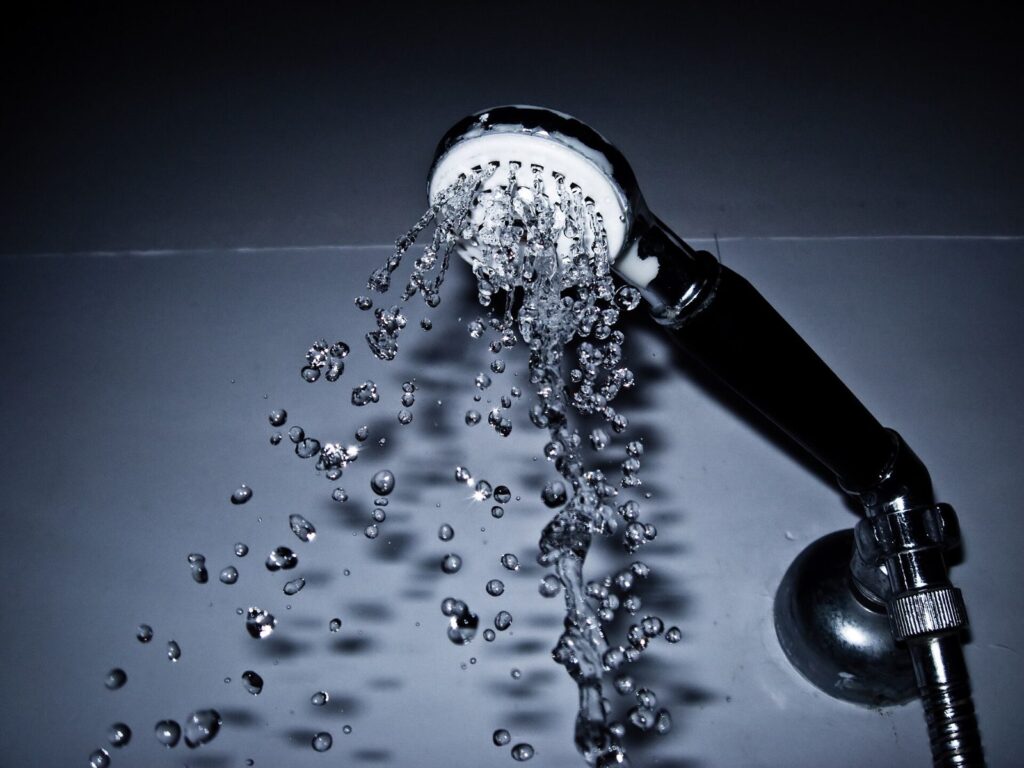

Hard water is unlikely to be a direct cause of true hair loss from the root. What it can do is leave mineral deposits on hair, making it feel dry, rough and more prone to breakage, which can look like thinning. Many people who move to the UAE notice changes in their hair, but those changes often coincide with other triggers such as stress, a new diet, illness or heat, so it is worth looking at the bigger picture before blaming the water.
In this guide
What “hard water” means
Water hardness mainly refers to dissolved minerals, especially calcium and magnesium. Hard water leaves limescale on taps and shower heads and makes soap lather less easily. Water quality and mineral content vary by source, building and plumbing.
In the UAE, most drinking and household water comes from desalination plants, and water is treated to meet national standards before distribution. However, what comes out of your shower can be affected by building storage tanks, pipes and maintenance. That is why two flats in the same area can have very different water, and why residents sometimes notice changes when they move.
What the research says
Studies on hard water and hair are limited and small. Some found that hair washed in hard water had lower tensile strength or more mineral deposits, while others found little difference in hair strength. There is no strong evidence that hard water causes follicles to stop producing hair, which is what true hair loss means.
So the realistic picture is:
- Hard water can affect the hair shaft: texture, shine, tangling and breakage.
- It is not a proven cause of pattern hair loss, telogen effluvium or alopecia areata.
- Mineral build-up may make some people’s scalp feel itchy or dry, especially with eczema or sensitive skin.
Breakage or shedding? How to tell
| Sign | More likely breakage (shaft damage) | More likely shedding (from the root) |
|---|---|---|
| Hairs you find | Short pieces of varying length | Full-length hairs, often with a small white bulb |
| Where | Ends, mid-lengths, areas you brush or tie | All over the scalp, or in a pattern |
| Texture | Dry, rough, frizzy, split ends | Hair may feel normal |
| Pattern | No change at the parting or crown | Widening parting, receding temples, thinning crown |
| Timing | Gradual, linked to styling and water | Sudden increase, or slow progressive thinning |
If you are seeing lots of full-length hairs or a widening parting, look for other causes. Our hair loss stages guide shows common patterns.
Other reasons hair changes after moving to the UAE
Relocation brings several known hair triggers together:
- Stress of moving, a new job, visas and housing, which can trigger telogen effluvium a few months later
- Diet changes, including skipped meals, lower protein or crash dieting
- Low vitamin D or iron, which are common and can be checked with blood tests
- Heat, sun and sweat, which can dry and weaken the hair shaft
- Air conditioning that dries out hair and skin
- Chlorine in pools, which many residents use more often
- New hair routines, such as more frequent washing, heat styling or tight hairstyles
If your hair changed after moving, the water may be one factor. It is rarely the only one.
Practical steps that help
Reduce mineral build-up and breakage
- Use a gentle clarifying or chelating shampoo occasionally, as the label advises, to remove mineral deposits.
- Follow every wash with conditioner on the mid-lengths and ends.
- Try a shower filter designed to reduce chlorine and some minerals; results vary between products.
- Clean shower heads regularly to remove limescale.
- Rinse hair with fresh water after swimming and condition afterwards.
- Reduce high heat and use heat protectant.
- Detangle gently with a wide-tooth comb, starting at the ends.
Some people use a diluted acidic rinse, such as diluted apple cider vinegar, to help smooth the cuticle. Keep it well diluted, avoid the eyes and broken skin, and stop if the scalp becomes irritated.
Special cases: colour-treated, curly and extension hair
Some hair types notice water quality more than others:
- Colour-treated hair. Minerals can make blonde shades look brassy and colour fade faster. Colour-safe clarifying products and regular gloss or toning treatments at the salon can help.
- Curly and coily hair. These textures are naturally drier, so mineral build-up adds to frizz. Many people find co-washing or low-lather cleansers, with deep conditioning, work better than frequent shampooing.
- Hair extensions. Extension hair gets no natural oils from the scalp, so minerals and chlorine dry it quickly. Rinse after swimming and condition the lengths well, keeping products away from bonds or tapes.
- Children’s hair. Usually copes well; gentle washing and conditioner are enough for most.
When to see a doctor
See a doctor or dermatologist if you notice
- A sudden increase in full-length hairs falling out
- A widening parting, thinning crown or receding temples
- Bald patches, scalp redness, scaling, pain or pus
- Hair loss with fatigue, weight change, palpitations or heavy periods
- Itching or flaking that does not improve with gentle care
A doctor can check iron, vitamin D, thyroid function and other factors, and examine your scalp. In the UAE, a family doctor or dermatologist in a licensed clinic can arrange this. Our guide on which doctor to consult for hair loss explains where to start.
Testing your water
If you want to know more about your water, ask your building management about tank cleaning schedules, or use a home water hardness test kit. Your local water and electricity authority publishes information on water quality. Keep in mind that visible limescale or a change in how soap lathers indicates minerals, not a health risk to your hair follicles.
A simple four-week plan
If you suspect water is affecting your hair, try a structured approach so you can see what actually helps:
- Week one: take photos of your parting and ends in daylight, and note how your hair feels after washing.
- Week two: introduce one change only, such as a shower filter or an occasional clarifying wash.
- Week three: add regular conditioning of the ends and reduce heat styling.
- Week four: compare photos and texture with week one.
If texture improves but shedding from the roots continues, the water was probably not the main issue, and it is time to see a doctor.
Frequently asked questions
Will a shower filter stop my hair falling out?
It may improve texture and reduce dryness for some people, but it is unlikely to stop true hair loss caused by other factors.
Is desalinated water bad for hair?
Desalinated water is treated before supply. Effects on hair are usually about mineral content and building plumbing, not desalination itself.
Can hard water cause dandruff?
It may make a dry or sensitive scalp feel worse. Persistent flaking needs a proper diagnosis, as it may be seborrhoeic dermatitis or psoriasis.
Should I wash my hair with bottled water?
It is not usually necessary. A clarifying shampoo, good conditioning and a filter are more practical options.
Sources: American Academy of Dermatology, NHS, World Health Organization
Cover photo: JovanCormac, CC BY 2.0. Last reviewed: 2026-11-25. General information only, not medical advice. Please consult a licensed practitioner in the UAE about your own situation.